
Overnight cinnamon rolls save you time and stress in the morning. Simply make the dough the night before and finish the cinnamon rolls in the morning.
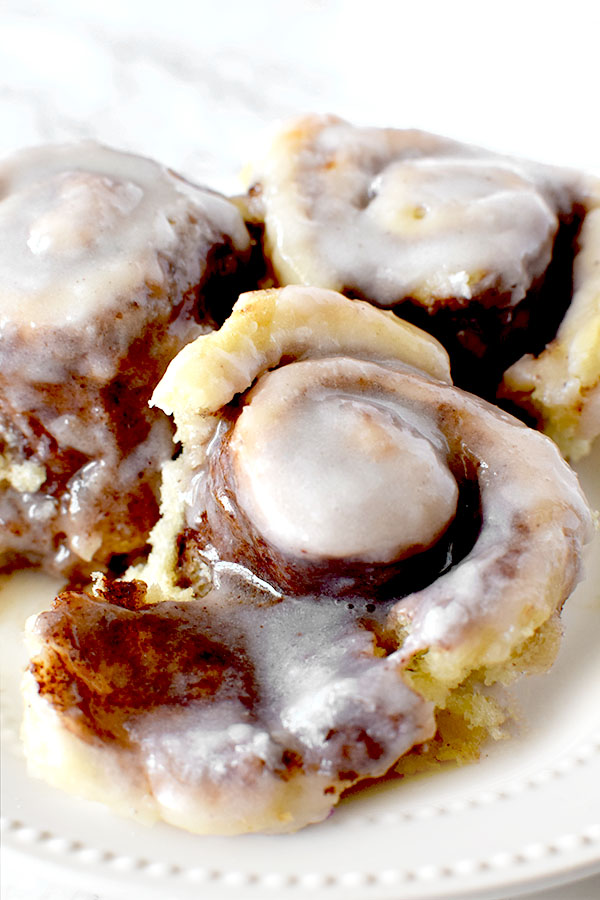
I love cinnamon rolls. They are without a doubt my favorite breakfast treat.
Especially when I make cinnamon rolls in a cast iron, because it looks so special.
The main problem with them though, is how time consuming it can be to make them.
Any time I want to make them I know it will often take at least two and a half hours - even if only half an hour is active time.
First: make the dough
Then: let to rise for at least an hour
Next: punch it down
After that: shape it
And: let it rise again for at least another hour
All in all, making cinnamon rolls can sometimes be too much of a hassle to do in one shot.
This can especially be true if you want to serve them for Sunday breakfast.
Or, worse, if you're planning on serving them for breakfast during the holidays.
Personally, I know I have enough going on when planning Thanksgiving dinner, so any corners I can cut, I'm happy to.
Solution? Overnight cinnamon rolls!
By the way, if you don't have a mixer and don't know how (or like to) knead, you should try my no knead cinnamon rolls.
And if you like these overnight cinnamon rolls, you may also like my overnight cloverleaf rolls or my overnight oats.
Jump to:
- How to Measure Flour and Other Dry Ingredients
- Why Does This Recipe Use Oil?
- Which Type Of Oil should i use?
- Do Eggs Need to Be at Room Temperature?
- What kind of sugar should I use?
- Can I use honey instead of sugar?
- How to halve this recipe
- how to store
- how to freeze
- Other Breakfast Recipes You May Like:
- Overnight Cinnamon Rolls
How to Measure Flour and Other Dry Ingredients
The best way to measure dry ingredients is with a scale, but in the United States, dry measuring cups are usually used instead.
Weighing ingredients is useful for home bakers, but it's especially important for professional bakers because they work with huge batches.
I usually use dry measuring cups when baking too, because I didn't grow up in a country that generally weighs ingredients, so please don't feel like you can't use them.
To measure most dry ingredients, first spoon them into a dry measuring cup and then level off the measuring cup with an upside-down butter knife.
Make sure not to pack it down because this will cause you to use more of the ingredient than the recipe calls for.
Brown sugar is the exception to the rule, though. To measure brown sugar, pack it into the measuring cup and then level off any excess.
To measure chocolate chips, nuts, or dried fruit, just pour them into the dry measuring cup and then level them off.
What are dry measuring cups?
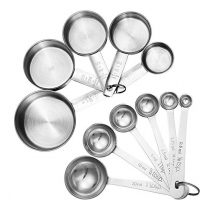
Dry measuring cups are the set of cups that usually come with measuring spoons. Each cup is a different measurement, just like each spoon is a different measurement.
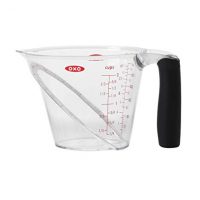
Liquid measuring cups, on the other hand, are the cups that usually hold more than one cup and have lines on the side that mark the measurements.
The problem with using liquid measuring cups to measure powdery dry ingredients, like flour and cocoa, is that you shake the cup to level them off. This causes the powder to settle, and you end up with more than you need.
I tested this with a friend who didn't believe me, and we ended up with a quarter cup more flour than the recipe called for.
Should I sift the flour and other dry ingredients?
It's usually recommended to sift your powdery ingredients, like flour and cocoa, before using them.
Sifting aerates the flour and removes any lumps, which helps make baked goods fluffier.
It also helps you get a more accurate measurement than when you use flour that's been packed tightly in a bag.
And sifting dry ingredients together, like flour, cocoa, and baking powder, helps make sure they're evenly distributed in the batter. Which honestly, I think is probably overrated, so I personally never bother with it.
Why Does This Recipe Use Oil?
Cakes, cupcakes, muffins, and quick breads made with oil usually bake up taller, have a better crumb, and a lighter texture than ones made with butter.
They also tend to stay moist and tender longer.
In fact, some recipes call for both oil and butter, instead of only butter, if they want a lighter and airier texture while still keeping the butter flavor.
I created a baking with oil - butter to oil conversion chart for you in case you want to convert some of your butter recipes to oil recipes.
Which Type Of Oil should i use?
I don't specify in the recipe which type of oil to use because it's mostly personal preference and I don't want anyone to feel they have to use specifically that type of oil. For the most part, you can use whatever oil you feel most comfortable using.
I use neutral oils like canola oil, safflower oil, and vegetable oil.
You can also use stronger oils like olive oil and coconut oil, but keep in mind that they may change the taste somewhat.
If you're going to use olive oil, use the one labeled pure olive oil because it has the mildest flavor. This should make the flavor a lot less noticeable.
Is It Better to Use Canola Oil or Olive Oil?
Canola oil is relatively cheap and, due to its lack of flavor and high smoke point, is very versatile.
Olive oil, on the other hand, is generally considered a healthier choice.
So, really, it's whatever you prefer.
How to Store Oil
Store oils in a cool, dark place to prevent them from becoming rancid.
If you store them in the fridge, some oils, like olive oil, may solidify and look strange, but don't worry, they'll return to normal at room temperature.
Coconut oil begins to solidify in temperatures under 76°F or 25°C.
Do Eggs Need to Be at Room Temperature?
The short answer is "no."
While a lot of recipes call for room-temperature eggs, the difference is only noticeable if you do a side-by-side comparison, and even then, the difference is very slight.
How Can I Tell if My Eggs Are Still Good?
Fill a glass with cool water and submerge the eggs.
If the eggs sink to the bottom and lay flat on their side, they're still fresh.
If they sink but stand on one end at the bottom of the glass, the eggs are older but still good to use.
If an egg floats to the top, it's very old and should be checked carefully for signs of spoilage before using.
What kind of sugar should I use?
You should use white granulated sugar, which is also called white sugar, granulated sugar, and table sugar.
If you live in the United Kingdom, you can use caster sugar instead.
You should not use powdered sugar, which is mostly used for dusting desserts and making frosting, icing, and glazes. But it is sometimes used to make fudge.
Can I use honey instead of sugar?
If you'd prefer to use honey instead of sugar, like I do in my honey challah recipe, you can. However, it may change the taste and texture somewhat.
Only replace sugar for making the dough. Do not replace sugar for the filling.
Honey is sweeter than sugar, so you don't need as much of it. As a general rule, use ¾ cup of honey for every 1 cup of sugar.
- 1 cup sugar → ¾ cup honey
- ¾ cup sugar → ⅔ cup honey
- ½ cup sugar → 6 tablespoons honey
- ¼ cup sugar → 3 tablespoons honey
Honey also adds liquid to the recipe, so you'll need to reduce the other liquid. For every cup of sugar you replace with honey, reduce the other liquid by about 3 to 4 tablespoons.
- 1 cup honey → remove 3 to 4 tablespoons liquid
- ¾ cup honey → remove about 2¼ to 3 tablespoons liquid
- ½ cup honey → remove about 1½ to 2 tablespoons liquid
- ¼ cup honey → remove about 1 tablespoon liquid
If there isn't enough liquid in the recipe to remove, you can remove it from the egg whites instead, but NEVER remove it from the oil.
Honey also causes baked goods to brown more quickly. For this reason, avoid using honey in recipes that need to be baked at temperatures above 350°F or 175°C.
How to halve this recipe
If you halve the recipe, you will need an 8-inch square baking pan.
The area of a square or rectangular pan is calculated by multiplying one side times the other side.
This recipe calls for an 9 x 13-inch rectangular pan so a 9 x 13 = 117 square inches where an 8 x 8 = 64 square inches.
So, if you halve 117, it comes out to 58.5 square inches which is close enough to 64 square inches.
how to store
Cover cinnamon tightly with plastic wrap. This will preserve the cinnamon rolls for two days at room temperature.
To preserve them for up to a week: refrigerate the cinnamon rolls in a sealed plastic bag with as much air removed as possible.
how to freeze
To freeze, store inside of a heavy-duty freezer bag and squeeze out the excess air before sealing. Freeze for up to 2 to 3 months. After that point, they are still safe to eat but their quality begins to degrade.
Other Breakfast Recipes You May Like:
Overnight Cinnamon Rolls
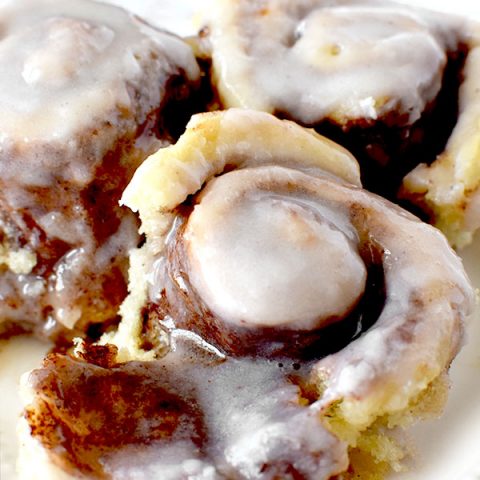
Overnight Cinnamon rolls are dairy free and perfect for when you don't have the time to do the whole process at once, such as early in the morning or when getting ready for the holidays.
Ingredients
DOUGH
- 1 cup warm water (235 milliliters)
- 1 tablespoon instant dry yeast
- 2 tablespoons white sugar
- 3 tablespoons oil*
- 1 egg
- 1 teaspoon salt
- 3 cups all-purpose flour (360 grams)
Filling
- 1 cup brown sugar, packed (220 grams)
- 2 tablespoons cinnamon
- ¼ cup oil* (60 milliliters)
Glaze
- 1 ½ cups powdered sugar (180 grams)
- 2 tablespoons water, warm
Instructions
- Pour the water into the bowl of a stand mixer. Add yeast and sugar. Let sit for a few minutes until the yeast is activated.
- Add oil, egg, salt, and flour. Knead until the dough is smooth but sticky.
- Place the dough in a greased large mixing bowl. Cover with a damp towel and place in the fridge overnight.
- Remove from the fridge and let warm to room temperature.
- Mix the brown sugar and cinnamon together in a bowl.
- Roll out the dough. Lightly pour the oil on the dough, and brush it out. Then, sprinkle the cinnamon sugar mixture over it as evenly as possible.
- From the longer side, roll the dough tightly. Then, cut the roll into 12 pieces and place the pieces in a 9x13 inch baking pan lined with parchment paper. Let it rise until it is about double in size.
- Preheat your oven to 360°F or 180°C. When it is fully heated, place the pan in the oven and bake for 20 minutes or until it begins to brown slightly. Remove the pan from the oven and let it cool.
- Combine the powdered sugar and water and mix until you have a nice, thick, smooth glaze. If it is too thick, add more water a ¼ teaspoon at a time until you've achieve the desired consistency.
- When the cinnamon rolls are completely cool, spoon the glaze over the rolls. Best served at room temperature.
Recommended Products
Some of the links below are affiliate links, which means that if you choose to make a purchase, I will earn a small commission. This commission comes at no additional cost to you.
Nutrition Information:
Yield:
12Serving Size:
1Amount Per Serving: Calories: 307Total Fat: 11gSaturated Fat: 1gTrans Fat: 0gUnsaturated Fat: 9gCholesterol: 17mgSodium: 206mgCarbohydrates: 48gFiber: 2gSugar: 22gProtein: 5g
Hi ElissaBeth! I've used a lot of your recipes in the past, and they are all wonderful (my family especially loves your babka recipe). I have a question about this one, and am hoping that you can help. I rose the dough overnight (11 hours), but it has not risen to double the original size, is that normal? If not, please let me know what I should do. Thanks so much!
I'm really glad to hear it! Thanks for sharing 🙂
Maybe your fridge is set to a little colder than normal? If that is the case, you can let it set out and the warmth of the room will allow the yeast to rise faster.
About to try this recipe. There is a step missing (roll out the dough), although I have made similar before and know whet to do.Thought you would like to know.
Thanks for the catch!