
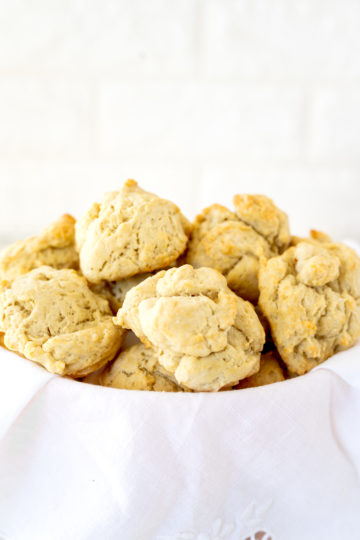
These no knead yeast rolls are very easy to make, is perfect for anyone who doesn't have a mixer, and doesn't like to knead. Serve at family dinners, meals with friends, holidays, and of course, Thanksgiving.
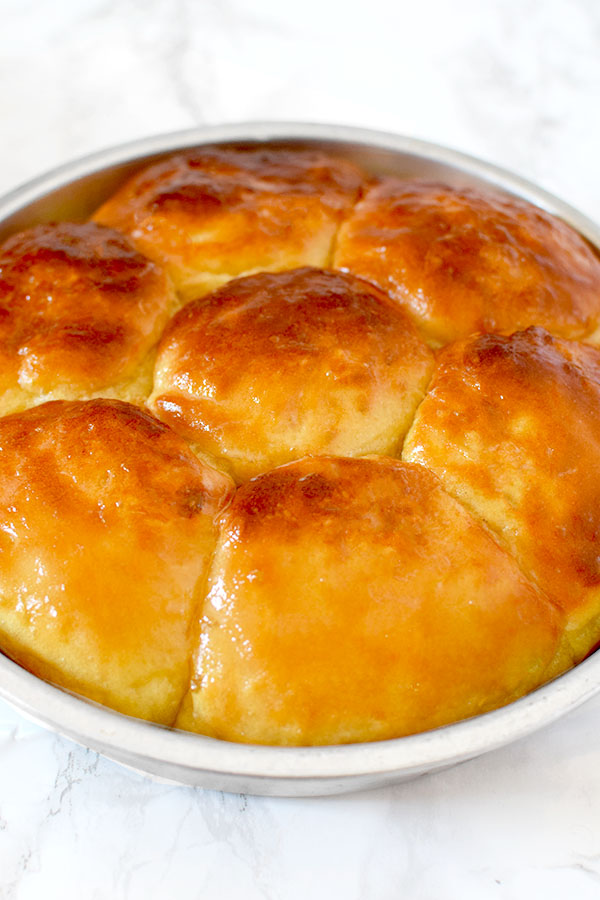
These no knead yeast rolls are some of my favorite dinner rolls. They use oil instead of butter and are light on the sugar compared to most dinner rolls.
I think they are particularly perfect as a savory dinner roll for Thanksgiving. However, that is not to say that they should be saved only for Thanksgiving.
These rolls are definitely too good to have only once a year.
I like to make these rolls to have as a quick breakfast or an easy lunch. Once they are baked and after they cool, I bag them and store them for later.
When I am ready to eat them, I just pop them in the microwave to warm them up. When I take them out, they are just as soft and fluffy as when they came out of the oven.
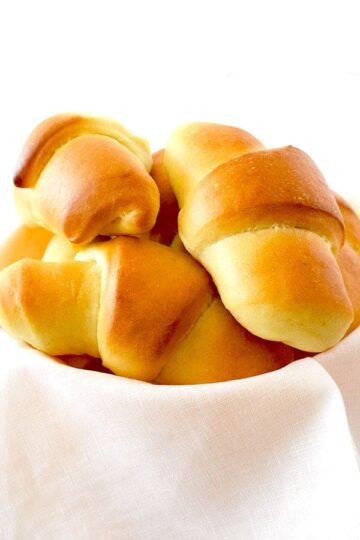
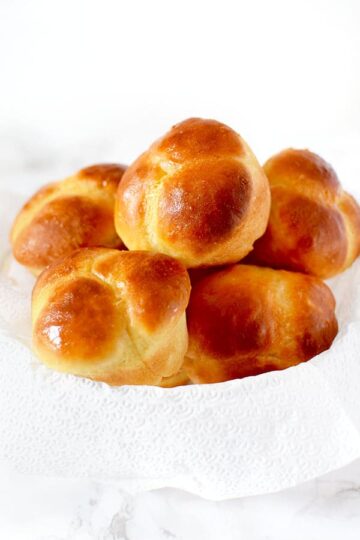
If you like these no knead yeast rolls, you may also like my no knead clover leaf rolls or my no knead cinnamon rolls.
Jump to:
- Would it be better if I use bread flour instead?
- Can I use whole wheat flour instead of all-purpose flour?
- How to Measure Flour and Other Dry Ingredients
- Why Does This Recipe Use Oil?
- Why do you use instant yeast?
- Do Eggs Need to Be at Room Temperature?
- What kind of sugar should I use?
- Can I use honey instead of sugar?
- Is there a way to make my dough rise faster?
- How do you punch the dough?
- Is the second rise really necessary?
- What is overproofing dough?
- How long can I keep dough in the refrigerator?
- Can I freeze unbaked dough for later use?
- Why did my dough turn out dense and heavy?
- How To Freeze
- Other Recipes You May Like:
- No Knead Yeast Rolls
Would it be better if I use bread flour instead?
No, because bread flour has a higher protein content than all-purpose flour, which creates a chewier texture and heavier, denser bread.
This can be great in recipes like bread bowls, but it's not good for the texture we're aiming for here. We want a light and fluffy texture like breads such as challah bread, not a chewy texture like bagels.
Can I use whole wheat flour instead of all-purpose flour?
You can.
But whole wheat flour absorbs more liquid than all-purpose flour, so it produces stiffer, drier dough that struggles to rise. You need to add extra liquid so the dough can be as soft and rise as well as it would if it were made with all-purpose flour.
For every cup of whole wheat flour substituted, increase the liquid by 2 teaspoons.
Then, once you've mixed up the dough but before kneading, let it rest for 30 minutes. This rest gives the flour the time it needs to fully absorb the liquid.
How to Measure Flour and Other Dry Ingredients
The best way to measure dry ingredients is with a scale, but in the United States, dry measuring cups are usually used instead.
Weighing ingredients is useful for home bakers, but it's especially important for professional bakers because they work with huge batches.
I usually use dry measuring cups when baking too, because I didn't grow up in a country that generally weighs ingredients, so please don't feel like you can't use them.
To measure most dry ingredients, first spoon them into a dry measuring cup and then level off the measuring cup with an upside-down butter knife.
Make sure not to pack it down because this will cause you to use more of the ingredient than the recipe calls for.
Brown sugar is the exception to the rule, though. To measure brown sugar, pack it into the measuring cup and then level off any excess.
To measure chocolate chips, nuts, or dried fruit, just pour them into the dry measuring cup and then level them off.
What are dry measuring cups?
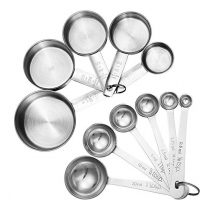
Dry measuring cups are the set of cups that usually come with measuring spoons. Each cup is a different measurement, just like each spoon is a different measurement.
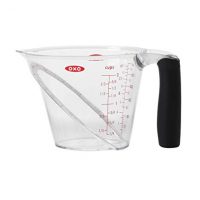
Liquid measuring cups, on the other hand, are the cups that usually hold more than one cup and have lines on the side that mark the measurements.
The problem with using liquid measuring cups to measure powdery dry ingredients, like flour and cocoa, is that you shake the cup to level them off. This causes the powder to settle, and you end up with more than you need.
I tested this with a friend who didn't believe me, and we ended up with a quarter cup more flour than the recipe called for.
Should I sift the flour and other dry ingredients?
It's usually recommended to sift your powdery ingredients, like flour and cocoa, before using them.
Sifting aerates the flour and removes any lumps, which helps make baked goods fluffier.
It also helps you get a more accurate measurement than when you use flour that's been packed tightly in a bag.
And sifting dry ingredients together, like flour, cocoa, and baking powder, helps make sure they're evenly distributed in the batter. Which honestly, I think is probably overrated, so I personally never bother with it.
Why Does This Recipe Use Oil?
Cakes, cupcakes, muffins, and quick breads made with oil usually bake up taller, have a better crumb, and a lighter texture than ones made with butter.
They also tend to stay moist and tender longer.
In fact, some recipes call for both oil and butter, instead of only butter, if they want a lighter and airier texture while still keeping the butter flavor.
I created a baking with oil - butter to oil conversion chart for you in case you want to convert some of your butter recipes to oil recipes.
Which Type Of Oil should i use?
I don't specify in the recipe which type of oil to use because it's mostly personal preference and I don't want anyone to feel they have to use specifically that type of oil. For the most part, you can use whatever oil you feel most comfortable using.
I use neutral oils like canola oil, safflower oil, and vegetable oil.
You can also use stronger oils like olive oil and coconut oil, but keep in mind that they may change the taste somewhat.
If you're going to use olive oil, use the one labeled pure olive oil because it has the mildest flavor. This should make the flavor a lot less noticeable.
Is It Better to Use Canola Oil or Olive Oil?
Canola oil is relatively cheap and, due to its lack of flavor and high smoke point, is very versatile.
Olive oil, on the other hand, is generally considered a healthier choice.
So, really, it's whatever you prefer.
How to Store Oil
Store oils in a cool, dark place to prevent them from becoming rancid.
If you store them in the fridge, some oils, like olive oil, may solidify and look strange, but don't worry, they'll return to normal at room temperature.
Coconut oil begins to solidify in temperatures under 76°F or 25°C.
Why do you use instant yeast?
I like instant yeast because it's really easy to use, it rises quickly, it doesn't come prepackaged into packets that don't match the amounts called for in the recipes, and it's more cost-effective than active dry yeast.
This is my favorite type of yeast to use because it lasts longer than fresh yeast, and you need less of it than active dry yeast. I use it whenever I make dinner rolls or cinnamon rolls.
Can I use active dry yeast?
Yes. You can replace instant yeast with dry yeast at a 1:1 ratio (which means spoon for spoon or the exact same amount).
But, keep in mind, it could take 15 to 20 minutes for the dough to rise to double in size.
And, keep in mind, if your yeast is older than 2015 (which is possible because it lasts ages when you freeze it and if you use it sparingly), you need to activate it before using it.
Around 2015, active dry yeast was reformulated so that you wouldn't need to activate it anymore, so you almost definitely do not need to activate/bloom it first, but double-check the instructions on the package just in case.
Can I use rapid-rise yeast?
Rapid-rise yeast is often specifically marketed toward users of bread machines. It's pretty much just instant yeast with a smaller grain.
The smaller granules allow it to dissolve faster in the dough, allowing it to rise even faster than instant yeast, so keep an eye on it to make sure it doesn't overproof.
Can I use fresh yeast?
Fresh yeast, cake yeast, block yeast, wet yeast, or compressed yeast is found in small, foil-wrapped cubes.
It is far less popular with home bakers because it's highly perishable. However, it is still widely available for commercial use and is still used by home bakers in some countries.
The benefit of using it is that it's easier to measure and has the most leavening power.
If you want to use fresh yeast in this recipe, then for every 1 teaspoon of instant dry yeast, you'd need 17 grams (or 0.6 ounces) of fresh yeast.
Make sure to bloom/activate the yeast before using it in this recipe.
Can I use sourdough starter instead of yeast?
Sourdough starter is wild yeast (which exists in the air) that has been cultivated.
I haven't tested it, so I really wouldn't recommend it. Sourdough is much more finicky to work with.
My brother once made a starter and named it Meekol (as if my family didn't have enough pets between the dog, backyard cats, parrots, and hamsters, we now had a pet made of fermented cultures!).
It was easy enough to make, but when we tried to make sourdough bread from some of it, it totally flopped, and the sourdough bread (if the results could even be called that) was thrown out.
In my opinion it's really too risky to use for this recipe.
Why activate the yeast first?
Even though I use instant yeast, I recommend activating it first if you have concern that it may be old.
This is especially important if you store your yeast outside the freezer, which drastically shortens its life span.
I almost always activate my yeast first, even though I store it in the freezer, because it helps me troubleshoot if something goes wrong.
I've had it happen a few times that the dough in a recipe took a long time to rise, and I was scared that the yeast wasn't good anymore, and I wasn't sure if the dough was hopeless and I should throw it out and start over (if I even had the time to start over), or if I should give it more time.
It always turned out that it just needed more time, but that caused me enough stress that I almost always make sure to proof the dough first just to be sure the yeast is still alive.
And it's particularly useful when you don't have a "warm" place to let it rise, because lower temperatures cause the dough to rise slowly.
And of course, if you're using fresh yeast, you do have to activate it first.
How do I activate yeast?
To activate or bloom the yeast, mix the yeast with warm liquid (usually around 110°F or 43°C) with sugar.
Most recipes call for a small amount of sugar, but I always use all of the sugar and liquid called for in the recipe to save time.
The sugar provides a food source for the yeast. After a few minutes, the mixture should become frothy, telling you that the yeast is active and ready for use.
Sometimes it could take longer, so don't worry if it takes around 10 minutes to be sure.
After that, you can add the rest of the ingredients to make the dough.
Do Eggs Need to Be at Room Temperature?
The short answer is "no."
While a lot of recipes call for room-temperature eggs, the difference is only noticeable if you do a side-by-side comparison, and even then, the difference is very slight.
How Can I Tell if My Eggs Are Still Good?
Fill a glass with cool water and submerge the eggs.
If the eggs sink to the bottom and lay flat on their side, they're still fresh.
If they sink but stand on one end at the bottom of the glass, the eggs are older but still good to use.
If an egg floats to the top, it's very old and should be checked carefully for signs of spoilage before using.
What kind of sugar should I use?
You should use white granulated sugar, which is also called white sugar, granulated sugar, and table sugar.
If you live in the United Kingdom, you can use caster sugar instead.
You should not use powdered sugar, which is mostly used for dusting desserts and making frosting, icing, and glazes. But it is sometimes used to make fudge.
Can I use honey instead of sugar?
If you'd prefer to use honey instead of sugar, like I do in my honey challah recipe, you can. However, it may change the taste and texture somewhat.
Honey is sweeter than sugar, so you don't need as much of it. As a general rule, use ¾ cup of honey for every 1 cup of sugar.
- 1 cup sugar → ¾ cup honey
- ¾ cup sugar → ⅔ cup honey
- ½ cup sugar → 6 tablespoons honey
- ¼ cup sugar → 3 tablespoons honey
Honey also adds liquid to the recipe, so you'll need to reduce the other liquid. For every cup of sugar you replace with honey, reduce the other liquid by about 3 to 4 tablespoons.
- 1 cup honey → remove 3 to 4 tablespoons liquid
- ¾ cup honey → remove about 2¼ to 3 tablespoons liquid
- ½ cup honey → remove about 1½ to 2 tablespoons liquid
- ¼ cup honey → remove about 1 tablespoon liquid
If there isn't enough liquid in the recipe to remove, you can remove it from the egg whites instead, but NEVER remove it from the oil.
Honey also causes baked goods to brown more quickly. For this reason, avoid using honey in recipes that need to be baked at temperatures above 350°F or 175°C.
Is there a way to make my dough rise faster?
To speed up the rising process, you can preheat the oven to its lowest temperature and turn it off.
Then, cover the dough with a damp towel and place it in the oven.
This trick works for me every time. Sometimes, I've needed to remove the dough and preheat the oven another time or two, but usually just once does the trick.
Some bakers feel it doesn't allow flavors to really develop. Personally, I've never noticed much of a difference.
How do you punch the dough?
"Punching" is a bit of a strong word. Yeast is a delicate living thing, so you actually need to treat it with care.
What you're really doing is lightly pressing down the dough through the center with your fist. This removes gases that have formed during the first rise.
By doing this, you are also bringing the yeast, sugar, and moisture back together, which is important for the second rise since the yeast feeds on the sugar.
After you "punch" down the dough, you should pull the edges of the dough to the center. Then, take the dough out of the bowl and place it on a lightly floured board. Next, scrape out the remaining dough from the bowl using a rubber spatula.
Lastly, shape your dough into a ball, and if desired, you can knead the dough two or three times to release additional air bubbles.
I like kneading my dough a few times by hand after the mixer has done most of the work. This creates an extra smooth crust.
Is the second rise really necessary?
The second rise allows the yeast to feed longer on the sugar. This allows the bread to become larger, have a better crumb, and develop a better flavor.
Also, if you were to let it rise only once, punch it down, shape it, and stick it in the oven, your bread would rise somewhat, but not enough for it to become fluffy.
What is overproofing dough?
Letting the dough rise is known as "proofing the dough." Overproofing is when you let the dough rise too much.
If you let your dough rise too much, it will seem big and beautiful at first, and then it will fall and become dense after it's removed from the oven.
This used to happen to my Mom all the time when she was first learning to bake bread.
She'd see how big and beautiful the bread would look if she let it continue to rise more than double in size, and she'd get excited at how fluffy it would be.
But every time she baked it that way, it would fall and get heavy, and she never understood what happened. Then, when she mentioned it to someone, they explained to her that it was because she was overproofing her dough.
If you've found that you left the dough to rise much larger than double its original size, punch it down, reshape it, and then let it rise to its proper size.
How long can I keep dough in the refrigerator?
You can refrigerate dough for up to 2 to 3 days. After that, the yeast may lose potency.
Keep in mind, the dough will continue to rise slowly during that time.
Can I freeze unbaked dough for later use?
You can freeze dough in an airtight freezer container for up to four weeks.
When you're ready to use it, first thaw the dough in the refrigerator overnight.
It will take up to twice as long for the dough to rise as it would if it hadn't been frozen.
Why did my dough turn out dense and heavy?
This can be due to overkneading, not letting it rise completely, overproofing, or using too much flour.
How To Freeze
Let bread cool completely.
Wrap each loaf tightly in plastic wrap and again in foil or freezer paper. Or, use a zip-top freezer bag with all of the air removed.
Freeze for up to 6 months. After that, the bread may become freezer burnt.
If you do leave bread in the freezer too long, and it becomes a little stale or slightly freezer burnt, don't throw it out.
Instead, you can use it to make French toast or croutons.
How to Defrost
Defrost bread in the oven at 325°F or 163°C for 20 to 30 minutes, until soft and fully thawed in the middle.
Other Recipes You May Like:
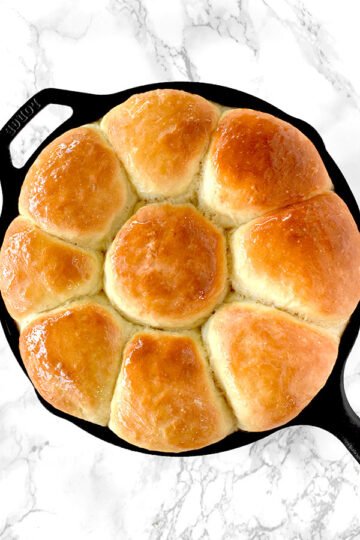
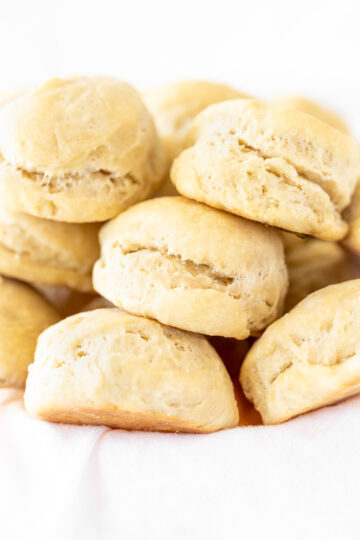
No Knead Yeast Rolls
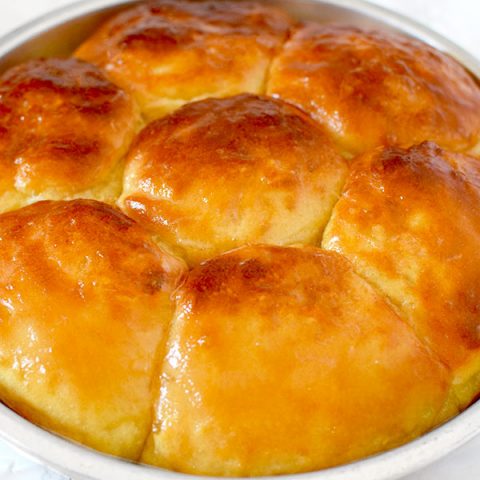
No knead yeast rolls are perfect if you don't have a mixer with kneading hooks and don't like or know how to knead by hand.
Ingredients
- 1 tablespoon instant yeast
- ¼ cup white sugar (50 grams)
- 1 ½ cup warm water (355 milliliters)
- 4 to 4 ½ cups all-purpose or bread flour (530 to 600 grams)
- 2 eggs
- 3 tablespoons oil
- 1 ½ teaspoons salt
Instructions
- Place the yeast, sugar, and water in a large mixing bowl and stir. Let it sit for about 5 to 10 minutes until it foams.
- Add flour, eggs, oil, and salt. Mix to combine until you have a thick, sticky, almost wet, loose dough.
- Cover with a damp towel and leave overnight in the fridge. In the morning, set the dough on the counter to warm up a little.
- Deflate the dough by pushing it down and pulling it away from the sides.
- Pinch off dough and flatten it to remove air bubbles. Shape into a ball and place in one of two greased round 9 inch baking pans. Repeat with the remaining dough until pans are full.
- Cover with a damp towel and keep in a warm place. Leave for 30 to 45 minutes or until the dough has about doubled in size.**
- Preheat oven to 390°F or 200°C. Bake for 15 to 18 minutes. Switch the oven to broil for the last minute to brown the rolls on top.
- Brush with oil for a glossy surface.
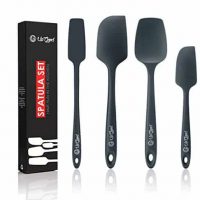
Recommended Products
Some of the links below are affiliate links, which means that if you choose to make a purchase, I will earn a small commission. This commission comes at no additional cost to you.
Nutrition Information:
Yield:
14Serving Size:
1Amount Per Serving: Calories: 195Total Fat: 4gSaturated Fat: 1gTrans Fat: 0gUnsaturated Fat: 3gCholesterol: 27mgSodium: 239mgCarbohydrates: 32gFiber: 1gSugar: 4gProtein: 6g

Hi, I'm ElissaBeth!
I created The Taste of Kosher to give you delicious, easy-to-make recipes you can feel proud to serve. I don't believe there are bad cooks and bakers, only bad recipes. I also believe that kosher and allergy-friendly recipes can and should taste just as good as the originals, and it's my mission to prove it.

Can I let it rise on the counter instead of refrigerating overnight? I want to make them ASAP.
No knead recipes need a lot of time to rise so the gluten can essentially knead themselves so in the fridge or out on the counter, they still need to rise for hours.
I know the recipe isobar no knead recipe but if you wanted to mike asap you can knead the dough 5 minutes AMD continue with recipe as if tou let it sit in fridge over night
Will this recipe work at high altitude?
Yes, just keep an eye on it because it may be done baking sooner.