
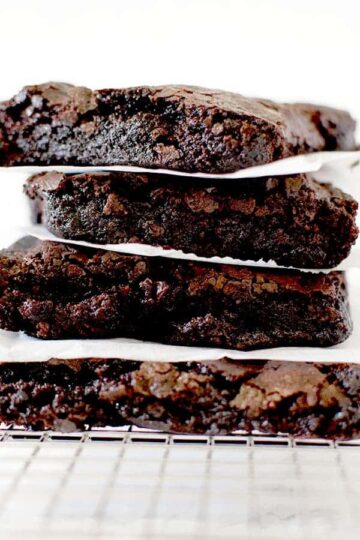
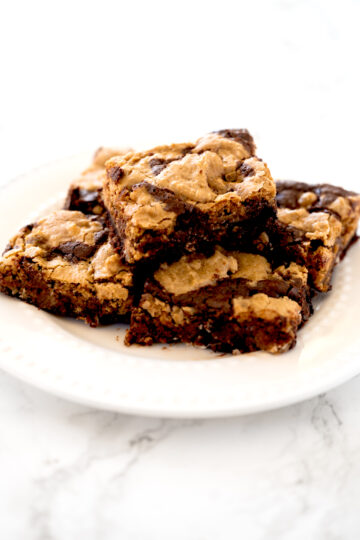
These dairy free chewy brownies are made without butter and are delicious with a rich and deep chocolaty flavor.
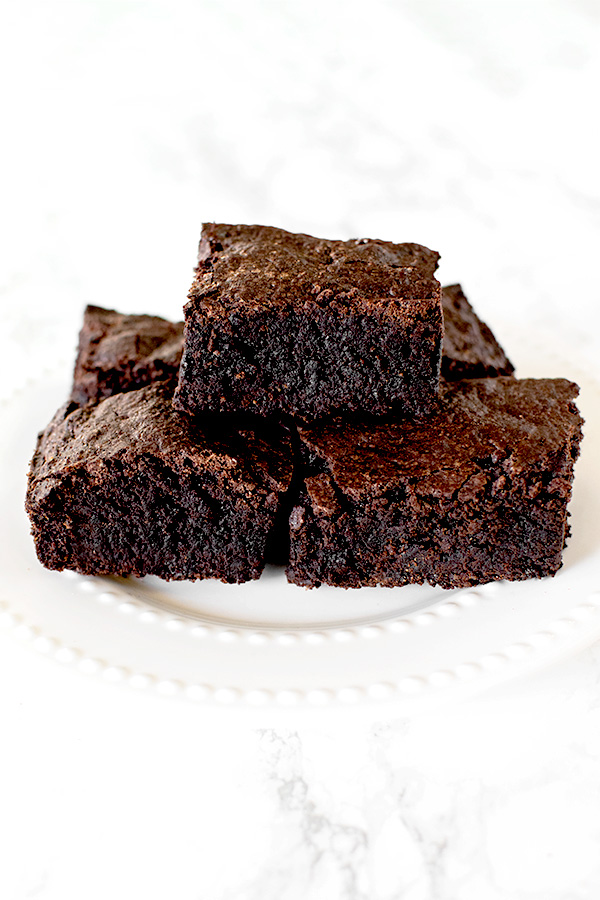
These brownies have a wonderfully chewy texture and incredibly rich chocolate flavor!
And even better, it's a one bowl recipe, it doesn't require you to melt chocolate, and uses simple ingredients you probably already have on hand.
I especially love these brownies when I make them with walnuts but I think walnuts with an apricot glaze inspired by the first ever brownies is a really nice touch for special occasions.
Jump to:
- Variations
- history of brownies
- How to Measure Flour and Other Dry Ingredients
- Which Type of Cocoa Should I Use?
- Why Does This Recipe Use Oil?
- Which Type Of Oil should i use?
- What kind of sugar should I use?
- Can I use honey instead of sugar?
- What Kind of Vanilla Should I Use?
- Do Eggs Need to Be at Room Temperature?
- Can I Make This Without Using Eggs?
- Can i make these brownies gluten free?
- troubleshooting
- how to double the recipe
- how to store
- how to freeze
- DIY Dairy free brownie mix
- Other Chocolate recipes You May like:
- Other dairy free desserts you may like
- Chewy Brownies without Butter
Variations
Chocolate Chips - while these brownies are already very rich, they still are great with little bursts of chocolate chips in every bite.
White Chocolate Chips - this gives a slightly different and completely delicious flavor.
Chocolate Chips & White Chocolate Chips - doing half regular chocolate chips and half white chocolate chips gives the best of both worlds.
Walnuts - because walnuts are amazing with chocolate!
Chocolate Ganache - chocolate ganache is always a delicious topping for brownies.
Topped with Walnuts and Apricot Glaze - this variation is inspired by the first ever brownie. Sprinkle the top with chopped walnuts before baking. Then once baked, brush the top of the brownies with apricot jelly.
history of brownies
Brownies were created by the pastry chef of the Palmer House Hotel in 1893.
Bertha Palmer, a prominent Chicago socialite and philanthropist whose husband owned the hotel, asked a pastry chef for a cake-like confection, that was smaller than a piece of cake, which would be easy to transport and could be included in boxed lunches.
Palmer was head of the Board of Lady Managers for the 1893 World's Fair and the dessert was to be given at the Women's Pavilion.
The result was the Palmer House Brownie, made of chocolate with walnuts and an apricot glaze, which The Palmer House Hotel still serves as a dessert to this day.
By 1907, the brownie were a popular dessert appearing in American cookbooks all over the country.
How to Measure Flour and Other Dry Ingredients
The best way to measure dry ingredients is with a scale, but in the United States, dry measuring cups are usually used instead.
Weighing ingredients is useful for home bakers, but it's especially important for professional bakers because they work with huge batches.
I usually use dry measuring cups when baking too, because I didn't grow up in a country that generally weighs ingredients, so please don't feel like you can't use them.
To measure most dry ingredients, first spoon them into a dry measuring cup and then level off the measuring cup with an upside-down butter knife.
Make sure not to pack it down because this will cause you to use more of the ingredient than the recipe calls for.
Brown sugar is the exception to the rule, though. To measure brown sugar, pack it into the measuring cup and then level off any excess.
To measure chocolate chips, nuts, or dried fruit, just pour them into the dry measuring cup and then level them off.
What are dry measuring cups?
Dry measuring cups are the set of cups that usually come with measuring spoons. Each cup is a different measurement, just like each spoon is a different measurement.
Liquid measuring cups, on the other hand, are the cups that usually hold more than one cup and have lines on the side that mark the measurements.
The problem with using liquid measuring cups to measure powdery dry ingredients, like flour and cocoa, is that you shake the cup to level them off. This causes the powder to settle, and you end up with more than you need.
I tested this with a friend who didn't believe me, and we ended up with a quarter cup more flour than the recipe called for.
Should I sift the flour and other dry ingredients?
It's usually recommended to sift your powdery ingredients, like flour and cocoa, before using them.
Sifting aerates the flour and removes any lumps, which helps make baked goods fluffier.
It also helps you get a more accurate measurement than when you use flour that's been packed tightly in a bag.
And sifting dry ingredients together, like flour, cocoa, and baking powder, helps make sure they're evenly distributed in the batter. Which honestly, I think is probably overrated, so I personally never bother with it.
Which Type of Cocoa Should I Use?
When a recipe calls for cocoa, always use unsweetened cocoa powder, unless specified otherwise.
This allows you to have better control of the sweetness of what you're making.
There are three basic forms of unsweetened cocoa powder: natural cocoa powder, Dutch-processed cocoa powder, and raw cacao powder.
Natural cocoa powder is your basic non-specialty cocoa powder, and it's the one you should use natural unsweetened cocoa powder for this recipe.
Natural cocoa powder is the most commonly used type of cocoa powder and is what you should use in most recipes, such as brownies, chocolate cupcakes, hot chocolate, or any recipe that simply says "cocoa powder."
Pro Tip: I store cocoa powder in a large canister so it doesn't make a mess when I go to use it. Doing this has made baking with cocoa so much easier and way less messy!
And, if you want to learn how to always use cocoa rather than melted chocolate in baking, you may like my post on how to substitute chocolate with cocoa powder.
Can I Use Dutch-Processed Cocoa Powder?
Dutch-processed cocoa powder starts with cocoa beans that have been treated with potassium carbonate, which neutralizes their acidity.
Since Dutch-processed cocoa powder is not acidic, it does not react with baking soda the way natural cocoa powder does.
Recipes that rely on natural cocoa powder for the acidity to trigger the baking soda may not rise properly if you replace the natural cocoa with Dutch-processed cocoa.
For this recipe, I recommend sticking with natural cocoa powder, though I have had readers who switched it out and liked the results. So if you want to try it, that's totally up to you.
Can I Use Raw Cacao Powder?
Raw cacao powder is different from natural and Dutch-processed cocoa powders.
It's made from the cacao bean and isn't nearly as processed. It comes from seeds that have been fermented and are processed at low temperatures to ensure that their nutritional benefits and bitter flavor are preserved.
You can use raw cacao powder if you really want to, but I don't recommend it, since it's not as absorbent as cocoa powder, and it may cause the recipe to be too liquidy and not bake properly.
Can I Use Sweetened Cocoa?
Sweetened cocoa is natural cocoa powder mixed with sugar.
Please don't use it when making this recipe because it will make it too sweet.
Why Does This Recipe Use Oil?
Baked goods made with oil to stay moist and tender longer.
In fact, some recipes call for both oil and butter, instead of only butter, if they want a lighter and airier texture while still keeping the butter flavor.
Also oil allows the rich flavor of the chocolate to shine whereas butter can overpower it, so I think brownies are generally better with oil instead of butter.
And, it makes these brownies dairy free.
Which Type Of Oil should i use?
I don't specify in the recipe which type of oil to use because it's mostly personal preference and I don't want anyone to feel they have to use specifically that type of oil. For the most part, you can use whatever oil you feel most comfortable using.
I use neutral oils like canola oil, safflower oil, and vegetable oil.
You can also use stronger oils like olive oil and coconut oil, but keep in mind that they may change the taste somewhat.
If you're going to use olive oil, use the one labeled pure olive oil because it has the mildest flavor. This should make the flavor a lot less noticeable.
Is It Better to Use Canola Oil or Olive Oil?
Canola oil is relatively cheap and, due to its lack of flavor and high smoke point, is very versatile.
Olive oil, on the other hand, is generally considered a healthier choice.
So, really, it's whatever you prefer.
What kind of sugar should I use?
You should use white granulated sugar, which is also called white sugar, granulated sugar, and table sugar.
If you live in the United Kingdom, you can use caster sugar instead.
You should not use powdered sugar, which is mostly used for dusting desserts and making frosting, icing, and glazes. But it is sometimes used to make fudge.
Can I use honey instead of sugar?
If you'd prefer to use honey instead of sugar, like I do in my honey challah recipe, you can. However, it may change the taste and texture somewhat.
Honey is sweeter than sugar, so you don't need as much of it. As a general rule, use ¾ cup of honey for every 1 cup of sugar.
- 1 cup sugar → ¾ cup honey
- ¾ cup sugar → ⅔ cup honey
- ⅔ cup sugar → ½ cup honey
- ½ cup sugar → 6 tablespoons honey
- ⅓ cup sugar → ¼ cup honey
- ¼ cup sugar → 3 tablespoons honey
Honey also adds liquid to the recipe, so you'll need to reduce the other liquid. For every cup of sugar you replace with honey, reduce the other liquid by about 3 to 4 tablespoons.
- 1 cup honey → remove 3 to 4 tablespoons liquid
- ¾ cup honey → remove about 2¼ to 3 tablespoons liquid
- ½ cup honey → remove about 1½ to 2 tablespoons liquid
- ¼ cup honey → remove about 1 tablespoon liquid
If there isn't enough liquid in the recipe to remove, you can remove it from the egg whites instead, but NEVER remove it from the oil.
Honey also causes baked goods to brown more quickly. For this reason, avoid using honey in recipes that need to be baked at temperatures above 350°F or 175°C.
What Kind of Vanilla Should I Use?
There are several types of vanilla you can use in baking, including vanilla extract, imitation vanilla, vanilla paste, and vanilla beans.
For everyday baked goods like muffins, cakes, cookies, and quick breads, some options are more practical than others.
Vanilla Extract
Vanilla extract is made by soaking vanilla beans in alcohol, which extracts the compounds responsible for their flavor. It is the most common type of vanilla used in baking.
When a recipe-including mine-calls for vanilla extract or simply says "vanilla," this is the type of vanilla that is generally being referred to.
Can I use imitation vanilla?
Imitation vanilla, also called artificial vanilla or vanilla essence, is considerably less expensive than pure vanilla extract and works well in everyday baked goods.
Since vanilla extract can be expensive, you can use imitation vanilla in my recipes without a problem.
Imitation vanilla can be used spoon for spoon in place of pure vanilla extract.
Though, keep in mind that some imitation vanillas are better than others, so if you can, try to use a good one.
Can I use vanilla paste?
Vanilla paste is a thick mixture containing vanilla bean seeds and vanilla extract. Commercial vanilla pastes may also contain sweeteners, thickeners, or other ingredients.
It can generally be used in place of vanilla extract and leaves visible flecks of vanilla bean in your baked goods.
Vanilla paste can generally be substituted for vanilla extract spoon for spoon.
Can I use vanilla beans?
Vanilla beans are the pods of vanilla orchids. The seeds inside the pod can be scraped out and added directly to a recipe.
Vanilla beans are more expensive and less convenient than extract, so I wouldn't recommend them for everyday baking.
But if you want to, you can use about 1 teaspoon of vanilla extract for each inch of vanilla bean called for in a recipe.
This is only an approximation, since vanilla beans vary in size and strength.
Can I use vanilla sugar?
Vanilla sugar is sugar that has been flavored with vanilla. It is particularly common in Europe and parts of the Middle East, including Israel.
It can be made by storing vanilla beans in sugar, mixing vanilla bean powder with sugar, or combining sugar with vanilla extract. Some countries also sell vanilla powdered sugar for use in confections.
You can substitute vanilla extract with vanilla sugar spoon for spoon.
How Should I Store Vanilla?
Keep vanilla extract and other vanilla products away from heat and direct light. Store them in an airtight container in a cool, dark place.
Do Eggs Need to Be at Room Temperature?
The short answer is "no."
While a lot of recipes call for room-temperature eggs, the difference is only noticeable if you do a side-by-side comparison, and even then, the difference is very slight.
Are Eggs Dairy?
No, eggs are not dairy.
Dairy is milk and any food products made from milk, including cheese, cream, butter, and yogurt.
So, while eggs are an animal product, they are not dairy.
Recipes like my pancakes without milk are dairy free, even though they contain eggs because they don't use milk or butter.
If this sounds like a silly question to you, you'd be surprised how many people think eggs are dairy because they're in the refrigerated section of the supermarket.
How Can I Tell if My Eggs Are Still Good?
Fill a glass with cool water and submerge the eggs.
If the eggs sink to the bottom and lay flat on their side, they're still fresh.
If they sink but stand on one end at the bottom of the glass, the eggs are older but still good to use.
If an egg floats to the top, it's very old and should be checked carefully for signs of spoilage before using.
Can I Make This Without Using Eggs?
I recommend you make my eggless brownies instead.
Can i make these brownies gluten free?
I recommend you try my gluten free dairy free brownies or oat flour brownies instead.
troubleshooting
While this is a very easy recipe, sometimes life happens and things go a little unexpected.
why is it taking longer to bake than directed?
Over time, the thermostat on ovens gets a little off, causing some ovens to run hot and others to run cool.
This is why recipes tend to say things like "10 to 15 minutes or until golden brown."
So, if it takes you longer than expected, that's fine, don't worry about it. Just keep baking until ready.
why did it come out dry?
Just like some ovens run cool, others run hot. If your oven runs hot, bake these at a lower temperature.
Ideally, you should get an oven thermometer to know what temperature you're really baking at.
how to double the recipe
If you double the recipe use a 9 x 13-inch pan.
It could take up to 5 minutes longer to bake.
how to store
For uncut brownies, wrap well in plastic wrap or in an airtight plastic storage bag. Keep at room temperature for up to four days.
How to store already cut brownies
For cut brownies, wrap individually with plastic wrap. Store in an airtight container or an airtight plastic bag.
Keep at room temperature for one to two days.
how to freeze
Wrap cooled uncut brownies tightly in a plastic wrap. Wrap again in aluminum foil.
Freeze for up to 3 months. After 3 months, the brownies are still safe to eat, but the quality begins to degrade.
DIY Dairy free brownie mix
Making your own dairy free brownie mix is easy!
Just take all the dry ingredients in this recipe, mix them together well, and put them in a bag, jar, or a container.
When you are ready to make the brownies, pour the dry ingredients into a bowl, add the wet ingredients, and bake as directed.
Other Chocolate recipes You May like:
Other dairy free desserts you may like
Or, you may like one of my many other dairy free desserts.
Chewy Brownies without Butter
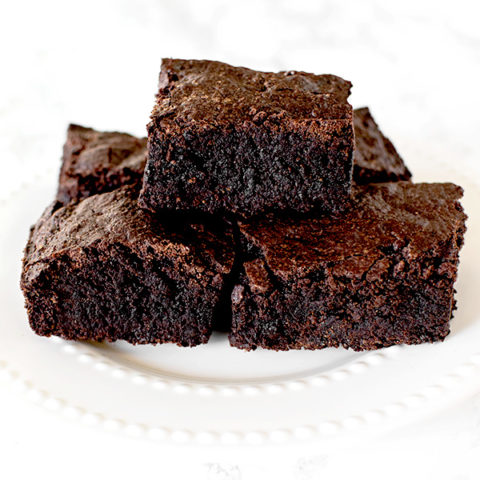
These chewy brownies are made without butter, but are simply divine!
Ingredients
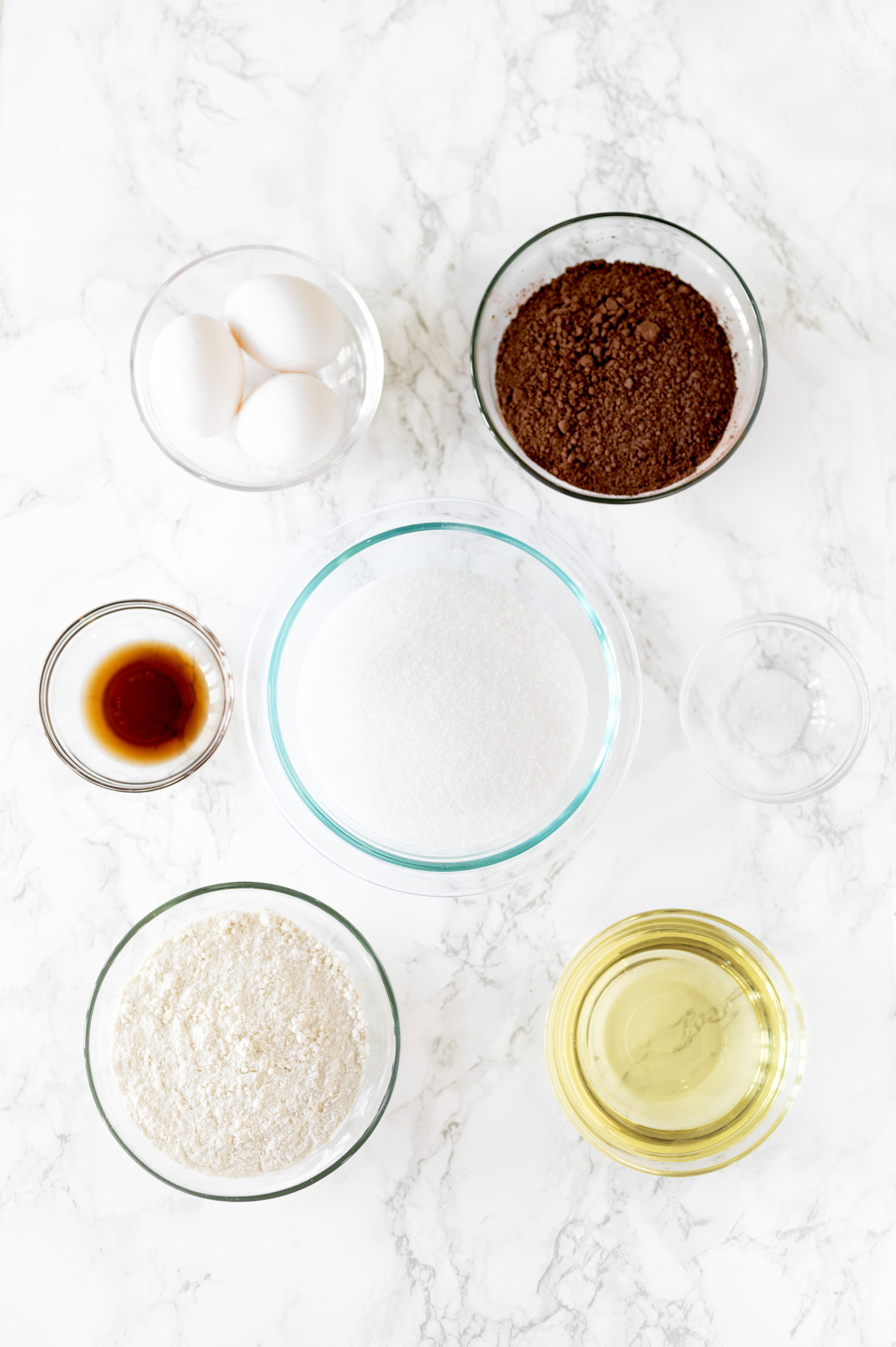
- 1 cup flour
- 1 cup cocoa
- 1 ¾ cup sugar
- ¼ teaspoon salt
- 3 eggs
- ¾ cup oil
- 1 tablespoon vanilla
- 1 cup walnuts, chopped, optional
Instructions
- Preheat oven 350°F or 175°C.
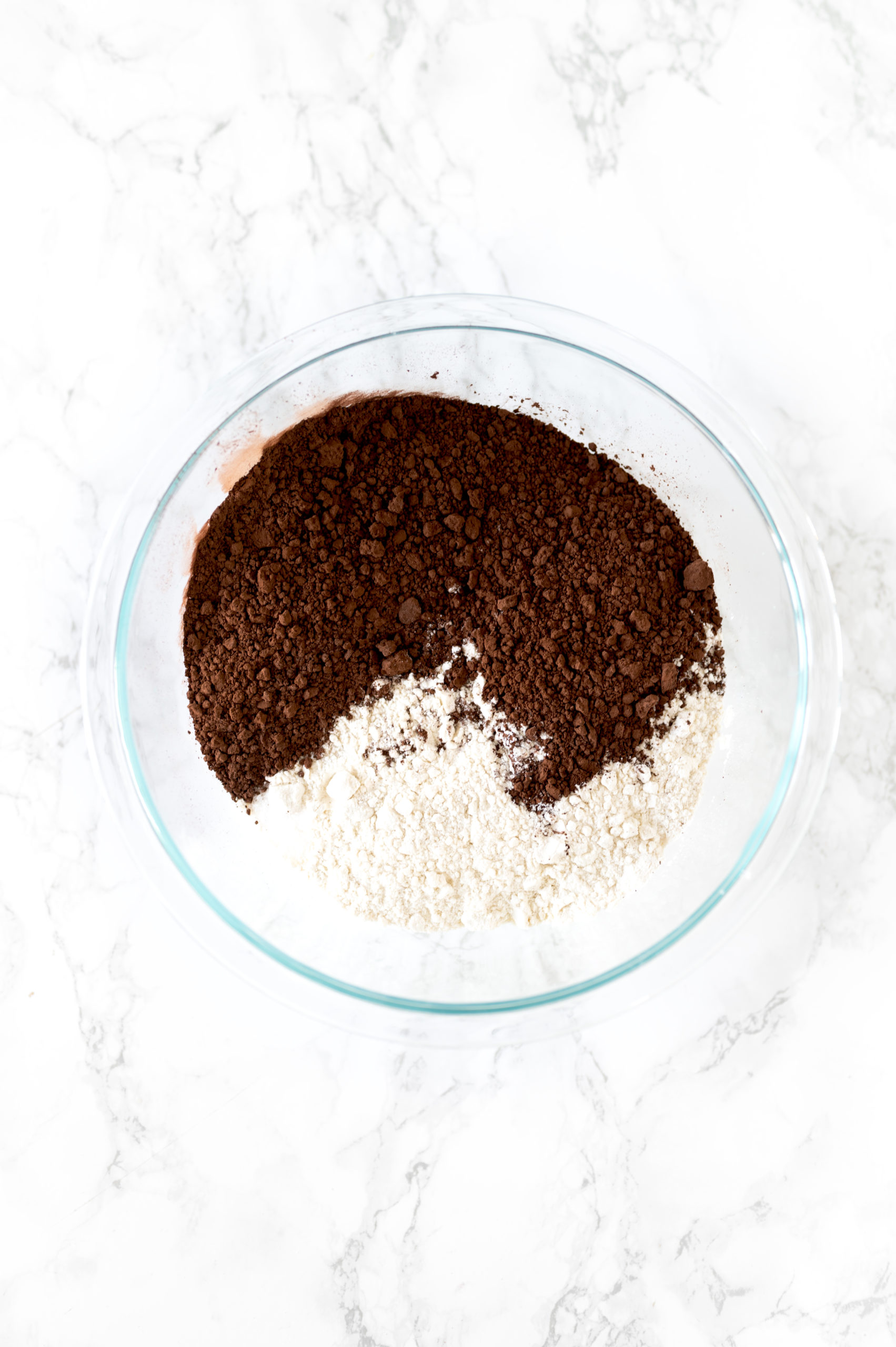
- Whisk together flour, cocoa, sugar, and salt in a bowl.
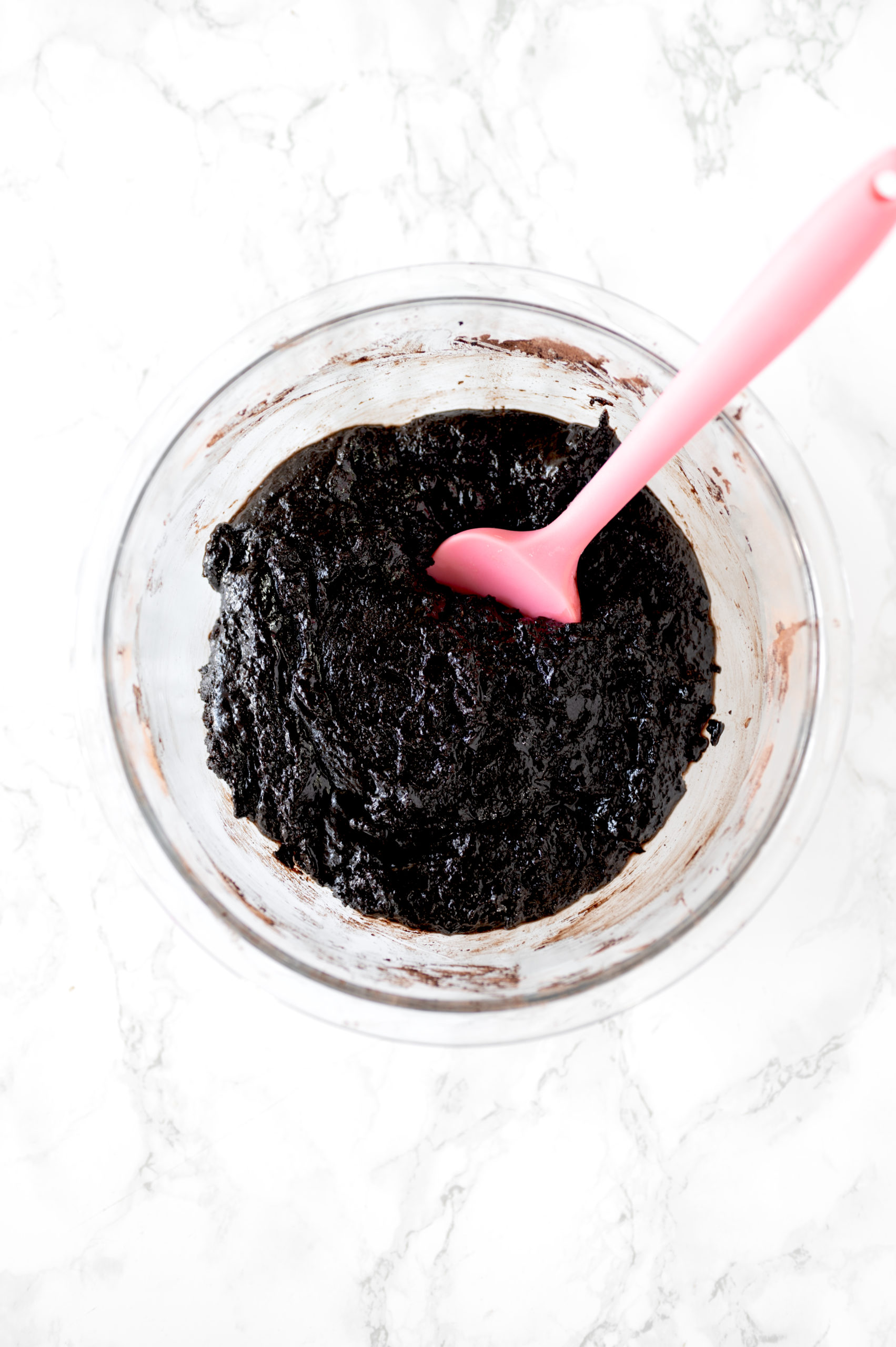
- Add eggs, oil, and vanilla. Mix until smooth.
- Fold in walnuts if desired.
- Pour batter into a parchment paper lined or greased and floured 8x8-inch baking pan.
- Bake for 30 to 45 minutes or just until the brownies begin to pull away from the sides of the pan.
- Cool completely in the pan on a cooling rack before cutting.
Nutrition Information:
Yield:
9Serving Size:
1Amount Per Serving: Calories: 518Total Fat: 30gSaturated Fat: 3gTrans Fat: 0gUnsaturated Fat: 25gCholesterol: 62mgSodium: 83mgCarbohydrates: 57gFiber: 3gSugar: 39gProtein: 7g

Hi, I'm ElissaBeth!
I created The Taste of Kosher to give you delicious, easy-to-make recipes you can feel proud to serve. I don't believe there are bad cooks and bakers, only bad recipes. I also believe that kosher and allergy-friendly recipes can and should taste just as good as the originals, and it's my mission to prove it.
Can this recipe be doubled?
Yep 🙂
I just made these brownies and much like a few comments I noticed, the batter was VERY thick. However, my daughter and I popped them in the oven and just took them out and snuck a little bite before they cooled. They are delicious! Thanks for the easy recipe ❣️
You're welcome ❤️ I'm glad you and your daughter liked them!
Is there a way to cook these in a crock pot (slow cooker)?
Honestly, I have no idea and I wasn't able to find anything in my food science research that would indicate one way or another. If you try it please let me know if it works or not 🙂
Is it suppose to be as thing as concrete, me and my husband made the batter and it’s crazy thick lol HELPPPPP 🤣🤣
Brownies are often very thick. If it's too thick you may have forgotten to add the eggs or oil 🙂
Can you use whole wheat flour for this
Sure
@Jeff,
If you use only whole wheat, the brownies will be dense. Mix whole wheat and all-purpose white flour 1/2 and 1/2, subtract 2 tablespoons of the flour and add 2 tablespoons cornstarch. I haven't actually tried it so this is just my suggestion but I think it would help if you aren't into eating hockey pucks.
My granddaughter made these for her birthday party, and they were DELICIOUS! They were tricky to serve, though, because they kind of fell apart. Is there really not supposed to be any baking powder or baking soda in them? Just wondering, because I want to make them again. Thanks!
I'm glad you enjoyed them! I double checked the recipe and they don't need baking powder. You can try adding 2 tablespoons of cornstarch to give them more of a texture like boxed brownies and see if that holds better for you 🙂
@ElissaBeth, Hi there, my bater tasted like straight oil. i added the right amount and they are currently cooking in the oven. Is this normal?
Hi, it sounds like you didn't use a neutral flavored oil