
This egg challah recipe is my absolute favorite! It is light, fluffy, and practically fool proof. I also love that this recipe is super simple to make and that it is one bowl, so clean up is very easy!
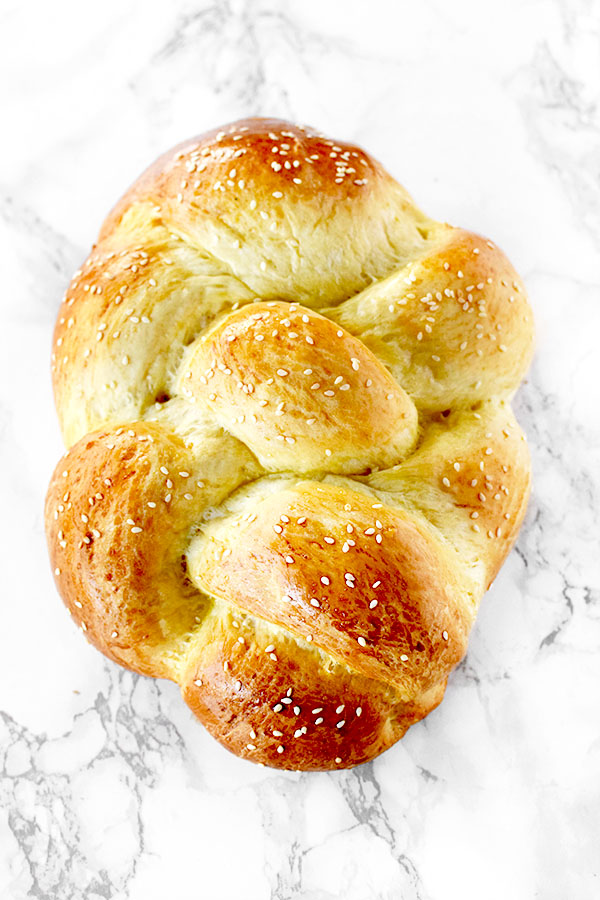
Years ago, I started baking the best challah recipe I'd ever used!
It is still a great recipe, but it is a water challah, and one day I was in the mood for an egg challah. So, I created this one.
This recipe is now my favorite challah recipe!
The funny thing about it is that I created it by accidently halving part of an Israeli recipe and mistakenly doubling the other part.
However, since then, it has become my family's go-to challah recipe.
I love how perfect it comes out every time, and my mom loves it because she says it is fool proof.
You may also like my Challah Egg in a Hole.
Jump to:
- How to Measure Flour and Other Dry Ingredients
- Would it be better if I use bread flour instead?
- Can I use whole wheat flour instead of all-purpose flour?
- Why do you use instant yeast?
- What kind of sugar should I use?
- Can I use honey instead of sugar?
- Do Eggs Need to Be at Room Temperature?
- Can I Make This Without Using Eggs?
- Which Type Of Oil should i use?
- Is there a way to make my dough rise faster?
- How do you punch the dough?
- Is the second rise really necessary?
- What is overproofing dough?
- How long can I keep dough in the refrigerator?
- Can I freeze unbaked dough for later use?
- Why did my dough turn out dense and heavy?
- Troubleshooting
- How To Freeze
- How to Defrost
- Other Recipes You May Like:
- Egg Challah Bread
How to Measure Flour and Other Dry Ingredients
The best way to measure dry ingredients is with a scale, but in the United States, dry measuring cups are usually used instead.
Weighing ingredients is useful for home bakers, but it's especially important for professional bakers because they work with huge batches.
I usually use dry measuring cups when baking too, because I didn't grow up in a country that generally weighs ingredients, so please don't feel like you can't use them.
To measure most dry ingredients, first spoon them into a dry measuring cup and then level off the measuring cup with an upside-down butter knife.
Make sure not to pack it down because this will cause you to use more of the ingredient than the recipe calls for.
Brown sugar is the exception to the rule, though. To measure brown sugar, pack it into the measuring cup and then level off any excess.
To measure chocolate chips, nuts, or dried fruit, just pour them into the dry measuring cup and then level them off.
What are dry measuring cups?
Dry measuring cups are the set of cups that usually come with measuring spoons. Each cup is a different measurement, just like each spoon is a different measurement.
Liquid measuring cups, on the other hand, are the cups that usually hold more than one cup and have lines on the side that mark the measurements.
The problem with using liquid measuring cups to measure powdery dry ingredients, like flour and cocoa, is that you shake the cup to level them off. This causes the powder to settle, and you end up with more than you need.
I tested this with a friend who didn't believe me, and we ended up with a quarter cup more flour than the recipe called for.
Should I sift the flour and other dry ingredients?
It's usually recommended to sift your powdery ingredients, like flour and cocoa, before using them.
Sifting aerates the flour and removes any lumps, which helps make baked goods fluffier.
It also helps you get a more accurate measurement than when you use flour that's been packed tightly in a bag.
And sifting dry ingredients together, like flour, cocoa, and baking powder, helps make sure they're evenly distributed in the batter. Which honestly, I think is probably overrated, so I personally never bother with it.
Would it be better if I use bread flour instead?
No, because bread flour has a higher protein content than all-purpose flour, which creates a chewier texture and heavier, denser bread.
This can be great in recipes like bread bowls, but it's not good for the texture we're aiming for here. We want a light and fluffy texture, not a chewy texture.
Can I use whole wheat flour instead of all-purpose flour?
You can.
But whole wheat flour absorbs more liquid than all-purpose flour, so it produces stiffer, drier dough that struggles to rise. You need to add extra liquid so the dough can be as soft and rise as well as it would if it were made with all-purpose flour.
For every cup of whole wheat flour substituted, increase the liquid by 2 teaspoons.
Then, once you've mixed up the dough but before kneading, let it rest for 30 minutes. This rest gives the flour the time it needs to fully absorb the liquid.
Why do you use instant yeast?
I like instant yeast because it's really easy to use, it rises quickly, it doesn't come prepackaged into packets that don't match the amounts called for in the recipes, and it's more cost-effective than active dry yeast.
This is my favorite type of yeast to use because it lasts longer than fresh yeast, and you need less of it than active dry yeast. I use it whenever I make dinner rolls or cinnamon rolls.
Can I use active dry yeast?
Yes. You can replace instant yeast with dry yeast at a 1:1 ratio (which means spoon for spoon or the exact same amount).
But, keep in mind, it could take 15 to 20 minutes for the dough to rise to double in size.
And, keep in mind, if your yeast is older than 2015 (which is possible because it lasts ages when you freeze it and if you use it sparingly), you need to activate it before using it.
Around 2015, active dry yeast was reformulated so that you wouldn't need to activate it anymore, so you almost definitely do not need to activate/bloom it first, but double-check the instructions on the package just in case.
Can I use rapid-rise yeast?
Rapid-rise yeast is often specifically marketed toward users of bread machines. It's pretty much just instant yeast with a smaller grain.
The smaller granules allow it to dissolve faster in the dough, allowing it to rise even faster than instant yeast, so keep an eye on it to make sure it doesn't overproof.
Can I use fresh yeast?
Fresh yeast, cake yeast, block yeast, wet yeast, or compressed yeast is found in small, foil-wrapped cubes.
It is far less popular with home bakers because it's highly perishable. However, it is still widely available for commercial use and is still used by home bakers in some countries.
The benefit of using it is that it's easier to measure and has the most leavening power.
If you want to use fresh yeast in this recipe, then for every 1 teaspoon of instant dry yeast, you'd need 17 grams (or 0.6 ounces) of fresh yeast.
Make sure to bloom/activate the yeast before using it in this recipe.
Can I use sourdough starter instead of yeast?
Sourdough starter is wild yeast (which exists in the air) that has been cultivated.
I haven't tested it, so I really wouldn't recommend it. Sourdough is much more finicky to work with.
My brother once made a starter and named it Meekol (as if my family didn't have enough pets between the dog, backyard cats, parrots, and hamsters, we now had a pet made of fermented cultures!).
It was easy enough to make, but when we tried to make sourdough bread from some of it, it totally flopped, and the sourdough bread (if the results could even be called that) was thrown out.
In my opinion it's really too risky to use for this recipe.
Why activate the yeast first?
Even though I use instant yeast, I recommend activating it first if you have concern that it may be old.
This is especially important if you store your yeast outside the freezer, which drastically shortens its life span.
I almost always activate my yeast first, even though I store it in the freezer, because it helps me troubleshoot if something goes wrong.
I've had it happen a few times that the dough in a recipe took a long time to rise, and I was scared that the yeast wasn't good anymore, and I wasn't sure if the dough was hopeless and I should throw it out and start over (if I even had the time to start over), or if I should give it more time.
It always turned out that it just needed more time, but that caused me enough stress that I almost always make sure to proof the dough first just to be sure the yeast is still alive.
And it's particularly useful when you don't have a "warm" place to let it rise, because lower temperatures cause the dough to rise slowly.
And of course, if you're using fresh yeast, you do have to activate it first.
How do I activate yeast?
To activate or bloom the yeast, mix the yeast with warm liquid (usually around 110°F or 43°C) with sugar.
Most recipes call for a small amount of sugar, but I always use all of the sugar and liquid called for in the recipe to save time.
The sugar provides a food source for the yeast. After a few minutes, the mixture should become frothy, telling you that the yeast is active and ready for use.
Sometimes it could take longer, so don't worry if it takes around 10 minutes to be sure.
After that, you can add the rest of the ingredients to make the dough.
What kind of sugar should I use?
You should use white granulated sugar, which is also called white sugar, granulated sugar, and table sugar.
If you live in the United Kingdom, you can use caster sugar instead.
You should not use powdered sugar, which is mostly used for dusting desserts and making frosting, icing, and glazes. But it is sometimes used to make fudge.
Can I use honey instead of sugar?
If you'd prefer to use honey instead of sugar, like I do in my honey challah recipe, you can. However, it may change the taste and texture somewhat.
Honey is sweeter than sugar, so you don't need as much of it. As a general rule, use ¾ cup of honey for every 1 cup of sugar.
- 1 cup sugar → ¾ cup honey
- ¾ cup sugar → ⅔ cup honey
- ⅔ cup sugar → ½ cup honey
- ½ cup sugar → 6 tablespoons honey
- ⅓ cup sugar → ¼ cup honey
- ¼ cup sugar → 3 tablespoons honey
Honey also adds liquid to the recipe, so you'll need to reduce the other liquid. For every cup of sugar you replace with honey, reduce the other liquid by about 3 to 4 tablespoons.
- 1 cup honey → remove 3 to 4 tablespoons liquid
- ¾ cup honey → remove about 2¼ to 3 tablespoons liquid
- ½ cup honey → remove about 1½ to 2 tablespoons liquid
- ¼ cup honey → remove about 1 tablespoon liquid
If there isn't enough liquid in the recipe to remove, you can remove it from the egg whites instead, but NEVER remove it from the oil.
Honey also causes baked goods to brown more quickly. For this reason, avoid using honey in recipes that need to be baked at temperatures above 350°F or 175°C.
Do Eggs Need to Be at Room Temperature?
The short answer is "no."
While a lot of recipes call for room-temperature eggs, the difference is only noticeable if you do a side-by-side comparison, and even then, the difference is very slight.
How Can I Tell if My Eggs Are Still Good?
Fill a glass with cool water and submerge the eggs.
If the eggs sink to the bottom and lay flat on their side, they're still fresh.
If they sink but stand on one end at the bottom of the glass, the eggs are older but still good to use.
If an egg floats to the top, it's very old and should be checked carefully for signs of spoilage before using.
Can I Make This Without Using Eggs?
I recommend you make my water challah instead.
Which Type Of Oil should i use?
I don't specify in the recipe which type of oil to use because it's mostly personal preference and I don't want anyone to feel they have to use specifically that type of oil. For the most part, you can use whatever oil you feel most comfortable using.
I use neutral oils like canola oil, safflower oil, and vegetable oil.
You can also use stronger oils like olive oil and coconut oil, but keep in mind that they may change the taste somewhat.
If you're going to use olive oil, use the one labeled pure olive oil because it has the mildest flavor. This should make the flavor a lot less noticeable.
Is It Better to Use Canola Oil or Olive Oil?
Canola oil is relatively cheap and, due to its lack of flavor and high smoke point, is very versatile.
Olive oil, on the other hand, is generally considered a healthier choice.
So, really, it's whatever you prefer.
Is there a way to make my dough rise faster?
To speed up the rising process, you can preheat the oven to its lowest temperature and turn it off.
Then, cover the dough with a damp towel and place it in the oven.
This trick works for me every time. Sometimes, I've needed to remove the dough and preheat the oven another time or two, but usually just once does the trick.
Some bakers feel it doesn't allow flavors to really develop. Personally, I've never noticed much of a difference.
How do you punch the dough?
"Punching" is a bit of a strong word. Yeast is a delicate living thing, so you actually need to treat it with care.
What you're really doing is lightly pressing down the dough through the center with your fist. This removes gases that have formed during the first rise.
By doing this, you are also bringing the yeast, sugar, and moisture back together, which is important for the second rise since the yeast feeds on the sugar.
After you "punch" down the dough, you should pull the edges of the dough to the center. Then, take the dough out of the bowl and place it on a lightly floured board. Next, scrape out the remaining dough from the bowl using a rubber spatula.
Lastly, shape your dough into a ball, and if desired, you can knead the dough two or three times to release additional air bubbles.
I like kneading my dough a few times by hand after the mixer has done most of the work. This creates an extra smooth crust.
Is the second rise really necessary?
The second rise allows the yeast to feed longer on the sugar. This allows the bread to become larger, have a better crumb, and develop a better flavor.
Also, if you were to let it rise only once, punch it down, shape it, and stick it in the oven, your bread would rise somewhat, but not enough for it to become fluffy.
What is overproofing dough?
Letting the dough rise is known as "proofing the dough." Overproofing is when you let the dough rise too much.
If you let your dough rise too much, it will seem big and beautiful at first, and then it will fall and become dense after it's removed from the oven.
This used to happen to my Mom all the time when she was first learning to bake bread.
She'd see how big and beautiful the bread would look if she let it continue to rise more than double in size, and she'd get excited at how fluffy it would be.
But every time she baked it that way, it would fall and get heavy, and she never understood what happened. Then, when she mentioned it to someone, they explained to her that it was because she was overproofing her dough.
If you've found that you left the dough to rise much larger than double its original size, punch it down, reshape it, and then let it rise to its proper size.
How long can I keep dough in the refrigerator?
You can refrigerate dough for up to 2 to 3 days. After that, the yeast may lose potency.
Keep in mind, the dough will continue to rise slowly during that time.
Can I freeze unbaked dough for later use?
You can freeze dough in an airtight freezer container for up to four weeks.
When you're ready to use it, first thaw the dough in the refrigerator overnight.
It will take up to twice as long for the dough to rise as it would if it hadn't been frozen.
Why did my dough turn out dense and heavy?
This can be due to overkneading, not letting it rise completely, overproofing, or using too much flour.
Troubleshooting
Even though this recipe is very easy to make, life happens and things sometimes don't go as expected.
Why is it taking longer than described to bake?
Over time, the thermostat on ovens gets a little off, causing some ovens to run hot and others to run cool. This is why recipes tend to say things like "10 to 15 minutes or until golden brown."
So, if it takes you longer than expected, that's fine. Don't worry about it. Just keep baking until ready.
Why did it come out dry?
Just like some ovens run cool, others run hot. If your oven runs hot, bake these at a lower temperature.
Ideally, you should get an oven thermometer to know what temperature you're really baking at.
Why did it burn?
If you baked it for the right amount of time, then burning is usually caused by two reasons.
The first is if you put them on the lower shelf in the oven.
The second is if the bottom of your oven has food particles that dripped onto it. Even a small bit of food that drips down could cause an oven to have problems heating properly and burn the cookies.
Why did it come out too wet?
Check your measuring cups. Sometimes measuring cups aren't accurate, and if you are using different sets of wet and dry measuring cups and measuring spoons from different brands, they may not match.
I've had sets that were a ¼ cup off.
To test your sets, fill your dry and wet measuring cups with 16 tablespoons. If 16 tablespoons doesn't fill a cup, your measuring cups are too big.
If it takes you less than 16 tablespoons to fill up a cup, your spoons are too big.
I've actually mixed and matched sets of spoons and cups that are too big because they matched each other, even if they weren't accurate.
Technically, it could also be that your cups or spoons are too small, but I haven't seen that happen before.
Something went wrong, I can't even explain it... what happened?
When this has happened to me, it's been because I overstuffed the oven.
Make sure to bake the recipe on the middle shelf in the oven, and only a normal amount at a time.
I once tried to make a bunch of brownie recipes all at once, and I think I may have had something on the bottom shelf too because I was in a rush, and it came out terrible.
I can't even describe what was wrong with it. It was just very, very wrong.
How To Freeze
Let bread cool completely.
Wrap each loaf tightly in plastic wrap and again in foil or freezer paper. Or, use a zip-top freezer bag with all of the air removed.
Freeze for up to 6 months. After that, the bread may become freezer burnt.
If you do leave bread in the freezer too long, and it becomes a little stale or slightly freezer burnt, don't throw it out.
Instead, you can use it to make French toast or croutons.
How to Defrost
Defrost bread in the oven at 325°F or 163°C for 20 to 30 minutes, until soft and fully thawed in the middle.
Other Recipes You May Like:
- Broccoli Kugel
- Perfect Matzo Balls
- Fluffy Matzo Balls
- Dairy Free Dinner Rolls
- Honey Challah
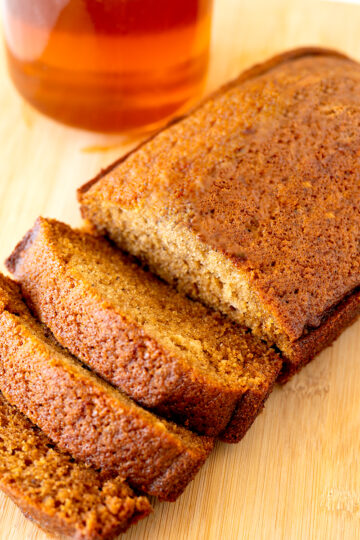
- Jewish Honey Cake
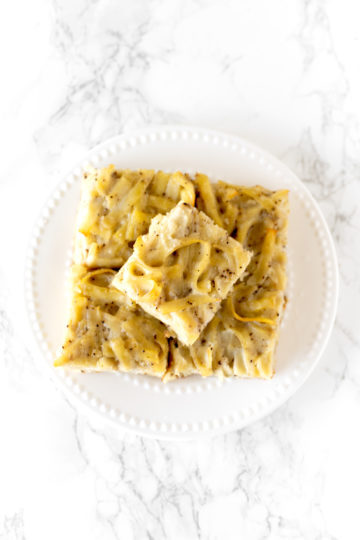
- Potato Kugel
Egg Challah Bread
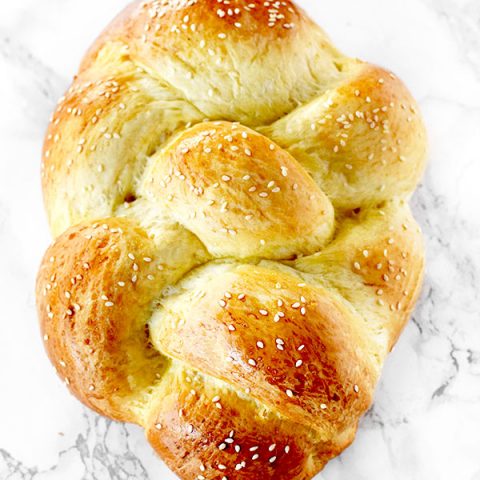
This is my favorite egg challah recipe because it is light, fluffy, and easy to make!
Ingredients
Dough
- 8 cups all-purpose flour (1 kilo)
- ½ cup sugar (100 grams)
- 2 ½ tablespoon instant dry yeast
- 2 teaspoon salt
- 2 egg
- ½ cup oil
- 1 ½ to 2 cup warm water (235 to 355 milliliter)
Wash
- 1 egg, beaten
Optional Topping
- 1 tablespoon sesame seeds
Instructions
- In the bowl of a stand mixer, combine flour, sugar, yeast, salt, eggs, oil, and 1 cup of water.
- Using a bread hook, knead, adding the water about a quarter cup at a time.
- The dough should be wet and sticky, but pulling away from the side.
- Cover with a damp towel and set in a warm place. Let the dough rise until double in size (about 45 minutes).
- Remove the dough and divide it in half. Take one half and braid on a floured surface. Repeat with the remaining dough.
- Place both on a parchment paper lined baking sheet and brush with egg wash. Let rise until double in size (about 45 minutes).
- Preheat the oven to 350°F or 175°C.
- Bake for 30 to 40 minutes or until golden brown.
Nutrition Information:
Yield:
30Serving Size:
1Amount Per Serving: Calories: 179Total Fat: 5gSaturated Fat: 0gTrans Fat: 0gUnsaturated Fat: 4gCholesterol: 19mgSodium: 150mgCarbohydrates: 29gFiber: 1gSugar: 3gProtein: 5g

Hi, I'm ElissaBeth!
I created The Taste of Kosher to give you delicious, easy-to-make recipes you can feel proud to serve. I don't believe there are bad cooks and bakers, only bad recipes. I also believe that kosher and allergy-friendly recipes can and should taste just as good as the originals, and it's my mission to prove it.
Can this recipe be made in a bread machine? My bread machine only holds 4 cups of flour. Can I half the recipe?
You definitely can half the recipe, but I haven't tried making challah in a bread machine but I know people do make challah in a bread machine, and I don’t see any reason why you couldn't make this recipe using a bread machine.
I'm going to try this recipe tomorrow! Any idea how it would work with a portion of whole wheat or white whole wheat?
Sorry I'm just seeing your comment now! I hope it turned out well 🙂 I haven't tried working with whole wheat yet but the rule of thumb generally is up to half of the all-purpose flour can be replaced with whole wheat flour
This Challah is excellent
Happy you liked it 🙂
Can the dough be put in the refrigerator overnight and baked the next day?
Sure, but I'd do this for the first rise and do the second rise the next day.
@ElissaBeth, Alright, thanks!