
This Dairy Free Sausage Gravy is made without milk and is perfect for Southern dishes like dairy free biscuits and gravy.
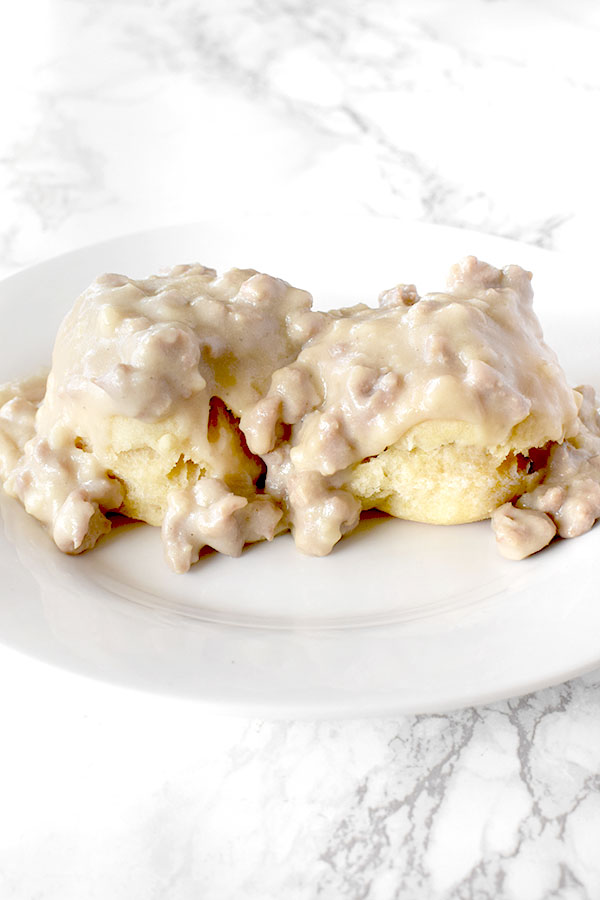
Sausage gravy is a traditional breakfast dish in the South.
Typically, it is served over biscuits or buttermilk biscuits to make biscuits and gravy.
Sausage gravy is usually made by first cooking the sausage, then removing the meat and using the fat to make a roux.
At this point, milk is usually added, but since this Sausage Gravy is made without milk, you can use either a dairy free milk or water.
If you don't have sausage, you can easily use ground beef instead.
What is the difference between country gravy and sausage gravy?
Unlike country gravy, sausage gravy is made with fat from the meat to make a roux and actually contains meat. Country gravy, on the other hand, typically uses butter to make the roux and is meatless.
Does sausage gravy have dairy?
Yes, sausage gravy contains dairy unless it is specifically a dairy free recipe, because it's made with milk.
However, you can make sausage gravy without milk. With the quality of dairy free milks on the market nowadays, it's likely you won't even taste a difference.
To make sausage gravy without milk, simply replace the milk with a dairy free milk or water.
Unsweetened almond milk (especially barista styled almond milk and almond cooking milk), natural flavored full fat oat milk, and soy milk all make great substitutes for milk.
Water is also a good substitute for milk in sausage gravy, though the color won't be as opaque as it would with a dairy free milk.
Personally, I like to use water and add some dairy free milk for color.
How do you make sausage gravy?
The first step to making sausage gravy is frying the sausage - I often use ground beef instead.
By doing this, you render the fat from the meat which you use to make a roux which will thicken the sauce.
You do this by adding flour and toasting it until it has a nutty flavor. If you stop cooking it too early, your gravy may have a flour taste to it.
Then, you add milk (or in this case, dairy free milk) which, with the help of the roux, becomes a sauce.
WHAT IS A ROUX?
A roux is equal parts flour and fat cooked together until it reaches a specific color.
It is used as a thickening agent for gravy, sauces, soups, and stews, and have been used in French cooking for hundreds of years to thicken sauce.
The flour is added to the melted fat or oil on the stove top, blended until smooth, and cooked to the desired color.
A roux can be white and used for white sauce, blond for classic gravies, or brown, which is used in gumbo and jambalaya.
The lighter the roux, the more thickening power it has.
Once the roux is the desired color, liquids like stock are added.
Browning Flour
People often see instructions like "brown the flour" and avoid this step because they aren't making brown gravy.
Browning flour means you're cooking the flour. This removes the flour flavor so it won't ruin the taste of your gravy.
WHY USE FLOUR TO THICKEN GRAVY
I use flour to thicken gravy because it gives the gravy that classic opaque, slightly pale look.
Many people don't like using flour because if it isn't cooked long enough, it can give a floury flavor to the gravy. Also, if not made properly, it can become clumpy.
The good news is, making a smooth creamy gravy is a snap if you turn it into a roux first.
Another benefit some people see with gravy made with flour is that it keeps better in the fridge. This means it can be made ahead of time or use up leftovers.
Which dairy free milk should I use?
Honestly, it's whatever you have on hand or prefer.
My go-to is a neutral flavored full fat oat milk because I find that they are the most similar to regular full fat milk.
Almond milk works well here, too. I personally like using an unsweetened barista almond milk because it is more similar to regular full fat milk, but whatever you have will work.
You can also use coconut milk, though it may have a subtle coconut flavor if you do. Coconut milk has more fat and is similar to using a light cream, but it won't make a noticeable difference.
I've never used soy milk, so I don't have any opinions on it, but you can use that as well.
HOW TO STORE MEAT
Once cooled, place in an airtight container and refrigerate. Store for 3 to 4 days.
HOW TO FREEZE MEAT
Freeze leftovers within 3-4 days. Place in an airtight container or resealable freezer bag.
Freeze for up to 6 months. After that, it is still safe to eat but the quality begins to degrade.
How to Reheat
Gravy will thicken as it cools. When you reheat it, add dairy free milk or water until it is smooth and reaches your desired consistency again.
Other Recipes You May Like:
- Sausage Gravy with Almond Milk
- Sausage Gravy with Oat Milk
- Biscuits and Gravy without Sausage
- Dairy Free Cornbread
- Scrambled Eggs without Milk
Sausage Gravy without Milk
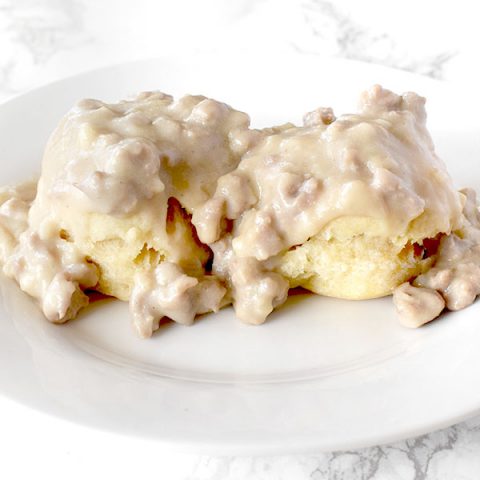
This sausage gravy is made without milk and is the dairy free version of the classic Southern breakfast.
Ingredients
- 8 ounces sausage or ground beef
- ¼ cup flour
- 2 ½ cups dairy free milk
- Salt
- Pepper
Instructions
- Tear small pieces of sausage or ground beef and add them in a single layer to a large skillet or frying pan.
- Brown the sausage over medium-high heat, stirring frequently.
- Reduce the heat to medium-low and add the flour. Stir it around and cook it for another minute to make a roux.
- Pour in the milk, stirring constantly. Cook the gravy, stirring frequently, until it thickens.
- Add salt and pepper to taste.
Nutrition Information:
Yield:
6Serving Size:
1Amount Per Serving: Calories: 189Total Fat: 13gSaturated Fat: 5gTrans Fat: 0gUnsaturated Fat: 6gCholesterol: 31mgSodium: 463mgCarbohydrates: 10gFiber: 0gSugar: 0gProtein: 9g
Since you are kosher what kind of sausage do you use? I have never had biscuits and gravy made with beef, so I intend to try it. But I am curious about the sausage. Thanks and love your recipes.I
Since I always have ground beef around the house and rarely if ever do I have sausages, I tend to just use ground beef 🙂