
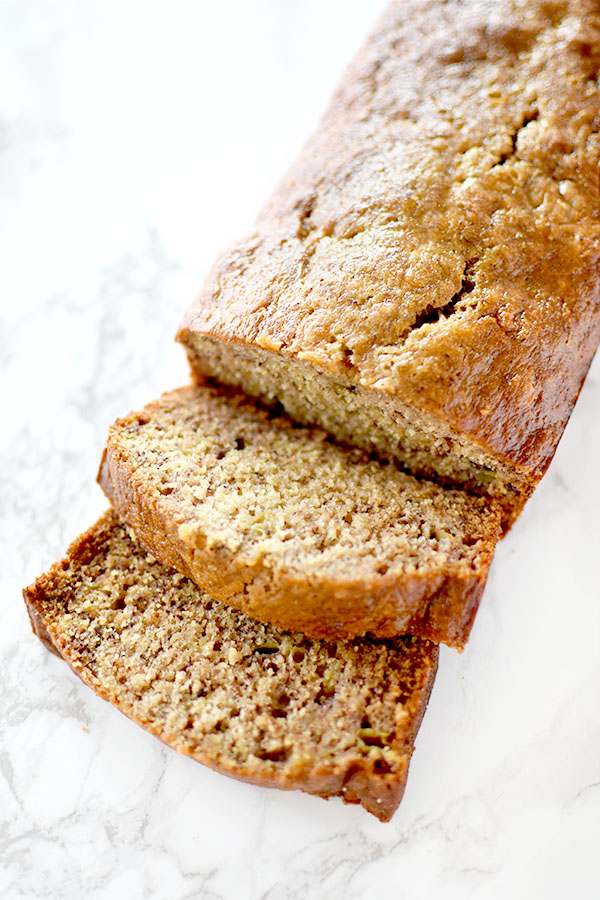
This Dairy Free Banana Bread is made with oil instead, so it's super moist and extra fluffy. It is also a great way to re-purpose old, soft, and spotted bananas!
Bananas are local produce in Israel. I sometimes see banana farms from the window of the car or bus on my way somewhere.
I love seeing this because, whether I am in the States or Israel, I truly believe in supporting the local economy.
Bananas have been in Israel since the 10th century. That means they've been grown here for over a millennium. I may just be a history nerd but I think that is really cool!
Bananas actually didn't make their way to the United States until the 19th century. In fact, banana bread didn't even exist until around the great depression.
Some food historians believe that it was created as a way for women to re-purpose old bananas. People were extra careful about waste during the depression, and on top of that, bananas were expensive.
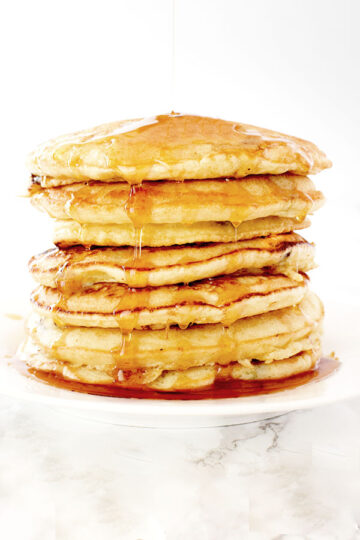
I'd bet that is also how banana muffins and maybe even banana pancakes came to be.
My family tends to have these around the house a lot in the summer. In the heat, bananas seem to go from not quite ripe to soft and spotted in ten minutes flat.
This means I bake a lot of banana bread, banana chocolate chip muffins.
And when we have had too much of that we shake things up by making banana cake made with oil.
Jump to:
- WHY USE OVERRIPE BANANAS?
- QUICK BREADS VS YEAST BREADS
- THE DIFFERENCE BETWEEN QUICK BREAD AND CAKE
- FLOUR Used For Quick Bread
- BREAD FLOUR VS ALL-PURPOSE FLOUR
- Can I use whole wheat flour instead?
- How to Measure Flour and Other Dry Ingredients
- Why Does This Recipe Use Oil?
- Do Eggs Need to Be at Room Temperature?
- Are Eggs Dairy Free?
- How Can I Tell if My Eggs Are Still Good?
- Can I Make This Without Using Eggs?
- Sugar
- How to Store Sugar
- Types of Vanilla
- Can vanilla extract be used as a substitute for vanilla beans?
- How to Store Vanilla
- Can I use baking soda and baking powder interchangeably?
- Can I Make This Gluten Free?
- BAKING AT HIGH ALTITUDES
- Baking with Humidity
- Adjusting for a Convection Oven
- TROUBLESHOOTING
- Recipe Tip
- how to store
- how to freeze
- Other Banana Recipes you may also like:
- Other breakfast recipes you may like:
- Banana Bread with Oil
WHY USE OVERRIPE BANANAS?
There are a few benefits to using overripe bananas in baking.
First and foremost, older bananas give a stronger flavor than fresh bananas - the darker the better.
Secondly, they are easier to mash than fresh bananas.
Lastly, it allows you to repurpose them instead of having food wasted.
QUICK BREADS VS YEAST BREADS
Yeast breads are breads made using yeast, such as dinner rolls and challah. Basically, it's what you think of when you hear the word "bread".
Quick breads, which originated in the United States, are breads that are leavened with baking soda or baking powder instead of yeast. This allows them to be prepared quickly in comparison to the time it takes to make breads made with yeast.
Irish soda bread and biscuits are two examples of quick breads.
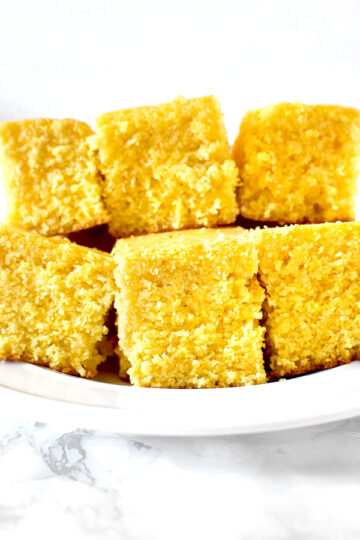
However, cornbread, and pumpkin bread are also quick breads, even though they seem more like somewhat dense cakes.
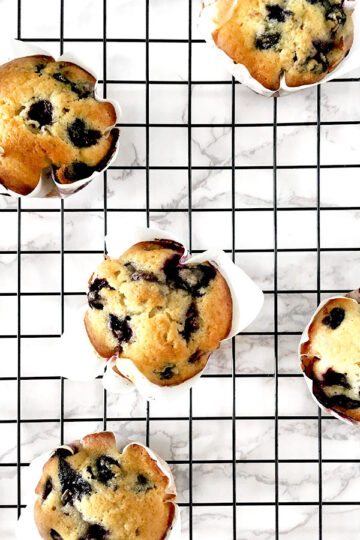
Even more surprisingly, muffins, like blueberry muffins, chocolate chip muffins, and banana chocolate chip muffins, are also a type of quick bread.
THE DIFFERENCE BETWEEN QUICK BREAD AND CAKE
Quick breads are denser than cake and usually require less sugar.
FLOUR Used For Quick Bread
Even though "bread" is in the name, quick breads should not be made with bread flour.
Bread flour has a higher protein content than all-purpose, which helps with gluten development. This creates a chewy texture and a heavier, denser bread.
These are not qualities you want from your quick bread.
You could use cake flour, but generally, all-purpose flour is used.
BREAD FLOUR VS ALL-PURPOSE FLOUR
Bread flour has a higher protein content than all-purpose, which helps with gluten development.
This creates a chewy texture and heavier and denser bread. This can be great in recipes like bread bowls. However, it is less desirable in breads like challah bread, which you want to be light and fluffy.
All-purpose flour has a lower protein content, but can generally be substituted for bread flour.
Can I use whole wheat flour instead?
Generally, if you want to use whole wheat flour in bread, it's recommended to replace up to half of the all-purpose flour called for with whole wheat flour.
How to Measure Flour and Other Dry Ingredients
The best way to measure dry ingredients is with a scale, but in the United States, dry measuring cups are usually used instead.
Weighing ingredients is useful for home bakers, but it's especially important for professional bakers because they work with huge batches.
I usually use dry measuring cups when baking too, because I didn't grow up in a country that generally weighs ingredients, so please don't feel like you can't use them.
To measure most dry ingredients, first spoon them into a dry measuring cup and then level off the measuring cup with an upside-down butter knife.
Make sure not to pack it down because this will cause you to use more of the ingredient than the recipe calls for.
Brown sugar is the exception to the rule, though. To measure brown sugar, pack it into the measuring cup and then level off any excess.
To measure chocolate chips, nuts, or dried fruit, just pour them into the dry measuring cup and then level them off.
What are dry measuring cups?
Dry measuring cups are the set of cups that usually come with measuring spoons. Each cup is a different measurement, just like each spoon is a different measurement.
Liquid measuring cups, on the other hand, are the cups that usually hold more than one cup and have lines on the side that mark the measurements.
The problem with using liquid measuring cups to measure powdery dry ingredients, like flour and cocoa, is that you shake the cup to level them off. This causes the powder to settle, and you end up with more than you need.
I tested this with a friend who didn't believe me, and we ended up with a quarter cup more flour than the recipe called for.
Should I sift the flour and other dry ingredients?
It's usually recommended to sift your powdery ingredients, like flour and cocoa, before using them.
Sifting aerates the flour and removes any lumps, which helps make baked goods fluffier.
It also helps you get a more accurate measurement than when you use flour that's been packed tightly in a bag.
And sifting dry ingredients together, like flour, cocoa, and baking powder, helps make sure they're evenly distributed in the batter. Which honestly, I think is probably overrated, so I personally never bother with it.
Why Does This Recipe Use Oil?
Cakes, cupcakes, muffins, and quick breads made with oil usually bake up taller, have a better crumb, and a lighter texture than ones made with butter.
They also tend to stay moist and tender longer.
In fact, some recipes call for both oil and butter, instead of only butter, if they want a lighter and airier texture while still keeping the butter flavor.
I created a baking with oil - butter to oil conversion chart for you in case you want to convert some of your butter recipes to oil recipes.
Which Type Of Oil to Use
I don't specify in the recipe which type of oil to use because it's mostly personal preference and I don't want anyone to feel they have to use specifically that type of oil. For the most part, you can use whatever oil you feel most comfortable using.
I use neutral oils like canola oil, safflower oil, and vegetable oil.
You can also use stronger oils like olive oil and coconut oil, but keep in mind that they may change the taste somewhat.
If you're going to use olive oil, use the one labeled pure olive oil because it has the mildest flavor. This should make the flavor a lot less noticeable.
Is It Better to Use Canola Oil or Olive Oil?
Canola oil is relatively cheap and, due to its lack of flavor and high smoke point, is very versatile.
Olive oil, on the other hand, is generally considered a healthier choice.
So, really, it's whatever you prefer.
How to Store Oil
Store oils in a cool, dark place to prevent them from becoming rancid.
If you store them in the fridge, some oils, like olive oil, may solidify and look strange, but don't worry, they'll return to normal at room temperature.
Coconut oil begins to solidify in temperatures under 76°F or 25°C.
Do Eggs Need to Be at Room Temperature?
The short answer is "no."
While a lot of recipes call for room-temperature eggs, the difference is only noticeable if you do a side-by-side comparison, and even then, the difference is very slight.
Are Eggs Dairy Free?
No, eggs are not dairy.
Dairy is milk and any food products made from milk, including cheese, cream, butter, and yogurt.
So, while eggs are an animal product, they are not dairy.
Recipes like scrambled eggs made without milk are dairy free even though they contain eggs, since they do not use milk or butter.
If this sounds like a silly question to you, you'd be surprised how many people think eggs are dairy because they're in the refrigerated section of the supermarket.
How Can I Tell if My Eggs Are Still Good?
Fill a glass with cool water and submerge the eggs.
If the eggs sink to the bottom and lay flat on their side, they're still fresh.
If they sink but stand on one end at the bottom of the glass, the eggs are older but still good to use.
If an egg floats to the top, it's very old and should be checked carefully for signs of spoilage before using.
Can I Make This Without Using Eggs?
Yes, all you have to do is replace each egg with ¼ cup of water.
Or you can try my eggless banana bread.
How Do I Replace Eggs in Recipes?
After being asked by a mother how she could make one of my dairy free recipes for her child who is allergic to eggs, I did a lot of research into it and started making egg free recipes too. I'm here to help you know 🙂
So, if you want to make pretty much any recipe eggless, here's how you do it:
Eggs do three things in most recipes: they help bind the ingredients together, help them rise, and add moisture.
For example, eggs are the primary binder in a pumpkin pie, creating a sliceable custard, but in my chewy brownies they mostly just help them rise.
So, to replace eggs in fluffy things like eggless chocolate cakes and eggless cornbread, use ¼ cup of water per egg called for.
For cookies like my eggless chocolate chip cookies, use 2 tablespoons of water in place of each egg.
In pies like eggless pumpkin pie or in recipes like eggless meatloaf, and really anything that uses eggs as a binder, use 1 tablespoon of cornstarch and ⅓ cup of water per egg. Though don't try this with matzo balls, because it doesn't work-believe me, I've tested it and ended up with a big mess.
Sugar
The primary role of sugar is to be a sweetener. However, sugar also contributes to the tenderness and moistness of the baked good by absorbing and retaining moisture and helps create the golden brown color when baking as it caramelizes.
Recipes with more sugar often result in softer, moister textures. However, I learned the hard way that too much sugar leads to a sticky mess.
When it's heated, sugar caramelizes, resulting in a rich, complex flavor and a brown color. This adds both flavor and color to baked goods and is also the process in which caramel sauce, dulce de leche, caramel candies, and regular candies are made.
When used in recipes containing yeast, the sugar is eaten by the yeast, producing carbon dioxide and causing the dough to rise.
Sugar also acts as a preservative in jams, jellies, and fruit preserves by reducing water activity and preventing microbial growth.
There are many different types of sugar, including white sugar, brown sugar, vanilla sugar, powdered sugar, turbinado sugar, and demerara sugar.
When a recipe calls for "sugar" without specifying anything else, it's referring to regular white sugar.
White Sugar
White sugar (sometimes called granulated sugar, table sugar, or white granulated sugar) is made of either beet sugar or cane sugar, which has undergone a refining process.
It is the easiest to find and most commonly used.
Brown Sugar
Brown sugar is white sugar with molasses added to it.
It is commonly used in chocolate chip cookie recipes, and it's rare for a recipe that calls for brown sugar not to also call for white sugar as well.
When a recipe calls for "brown sugar" but doesn't specify what type (light or dark), it is referring to light brown sugar.
In my recipes, you can use whatever type of brown sugar you have on hand, whether it is dark brown sugar, light brown sugar, or demerara sugar - which is very common in Israel.
Just keep in mind that the flavor and color will be slightly different, depending on what you choose to use.
Turbinado Sugar
Turbinado sugar is better known as "raw sugar." But, despite this name, the sugar is not really "raw."
Instead, it's partially refined sugar that retains some of the original molasses.
The term "raw sugar" may also give off the impression that it is somehow healthier.
In reality, turbinado sugar is nutritionally similar to white sugar.
Demerara Sugar
Demerara sugar is very popular in Israel and is especially delicious in tea, but is also used for baking.
Unlike white sugar, demerara sugar undergoes minimal processing and retains some vitamins and minerals.
However, it is still not much healthier than white sugar.
Vanilla Sugar
Vanilla sugar is not very common in the States. However, it is common in Israel and parts of Europe.
This is sugar that sat for an extended period of time with vanilla beans, giving it a vanilla flavor.
Caster Sugar
This type of sugar is common in the United Kingdom.
It has a grain finer than white (granulated) sugar and larger than powdered sugar.
Caster sugar is often called for in recipes for delicate baked goods like meringues, souffles, and sponge cakes.
You can use a 1:1 conversion rate between caster sugar and white (granulated) sugar.
Powdered sugar
Powdered sugar, sometimes known as confectioners' sugar, is a sugar with a powdered texture.
This sugar is rarely used for baking. Instead, it is used for dusting desserts and making frosting, icing, and glazes.
In some countries, you can also find powdered vanilla sugar.
It is made the exact same way regular vanilla sugar is made. However, the sugar used is powdered instead of granulated.
Vanilla Extract vs Vanilla sugar
In my recipes, I don't specify what kind of vanilla to use.
The reason for this is that in the States, vanilla extract is exclusively used.
Meanwhile in Israel, along with many European countries, vanilla sugar is common.
In most, if not all recipes, both vanilla extract and vanilla sugar can be used.
In recipes where vanilla sugar can be used instead of extract, you can replace them 1:1.
Replacing Sugar with Honey
If you'd prefer to use honey instead of sugar, you can do so with pretty good results.
Honey can be two or even three times as sweet depending on the honey, so for every 1 cup of sugar, you can use ½ to ⅔ cup honey.
Since honey adds liquid, you need to remove some to balance it out. For every cup of honey, remove a ¼ cup of liquid.
Also, it burns faster than granulated sugar, so you want to lower the baking temperature by 25°F. In addition, check it early and often to avoid burning or overbaking.
How to Store Sugar
Sugar should be stored in an airtight container to prevent clumping and moisture absorption, and kept in a cool, dry place.
Types of Vanilla
Vanilla comes from a pod commonly known as a "vanilla bean", which comes from the vanilla orchids.
Vanilla pods have been used for flavoring since the Aztecs and was introduced to Europe by a Spanish conquistador, along with cocoa.
Vanilla Extract
Vanilla extract is created by soaking vanilla beans in alcohol for some time. This is the most commonly used type of vanilla.
Vanilla Sugar
Vanilla sugar is common in Europe and some parts of the Middle East, like Israel.
It is made from vanilla beans sitting in sugar, vanilla bean powder mixed with sugar, or sugar mixed with vanilla extract.
In some countries, like Italy, you can also find vanilla powdered sugar, which is used for confections.
Vanilla Paste
Vanilla paste is generally a specialty item. It is a thick paste that contains a blend of the scraped-out vanilla pod seeds and vanilla extract.
You can use it as you do vanilla extract and it will leave flakes of vanilla bean like you see in vanilla bean ice cream.
Imitation Vanilla
Imitation Vanilla, otherwise known as artificial vanilla or vanilla essence, is made from synthetic vanilla.
This is the compound that naturally occurs in vanilla beans and gives it its flavor.
Can I use imitation vanilla?
Many will tell you that you should use high quality vanilla, just like they say you should use the best cocoa.
However, most of us will probably not be willing to pay the hefty price that comes with exceptionally high-quality ingredients.
Overall, vanilla is very expensive, so the extract is as well.
So, if you're not going to get regular quality vanilla extract, you might as well use imitation vanilla.
Can vanilla extract be used as a substitute for vanilla beans?
Yes, vanilla extract can be used as a substitute for vanilla beans. Use about 1 teaspoon of vanilla extract for each inch of vanilla bean.
How to Store Vanilla
Pure vanilla extract and other vanilla products should be kept away from heat and light, and should be stored in an airtight container in a cool, dark place.
Can I use baking soda and baking powder interchangeably?
No. Even though baking soda and baking powder are both leavening agents that make things rise, they work differently and aren't generally interchangeable.
When baking soda (also known as sodium bicarbonate) is combined with acidic ingredients, it makes carbon dioxide. This helps batter or dough rise and gives baked goods a light, fluffy texture.
That's why baking soda is commonly used in recipes have acidic ingredients, like buttermilk, lemon juice, vinegar, or natural cocoa powder.
Baking soda is also roughly four times as powerful as baking powder, so you don't need a lot of it. Using too much can actually give your baked goods a bitter or metallic taste.
Baking soda needs enough acid to react with it, so substituting it for baking powder can leave things flat and tasting off.
Baking powder, on the other hand, is a combination of both baking soda and an acid, so it doesn't need an acidic ingredient in the recipe to create carbon dioxide.
This makes baking powder useful in recipes that don't have enough acidic ingredients to activate baking soda. For example, it's commonly used in recipes like matzo balls and biscuits.
Because baking powder is less powerful than baking soda, recipes generally call for more of it. So, if you try to use baking soda instead of baking powder, the texture won't come out right and the flavor will probably taste disgusting.
Why do some recipes call for both?
Some recipes use both baking soda and baking powder because they do slightly different things.
For example, my chocolate cake has enough acid for baking soda to react with it, but if you'd use enough baking soda to give the cake the lift it need, it would ruin the flavor and you'd have to throw the cake out.
So, instead of adding more baking soda, the recipe uses baking powder to give additional rise.
How can I tell if baking soda and baking powder are still good?
Both baking powder and baking soda can continue to be used well past their best by dates, but they become less potent over time and can eventually stop working altogether.
To test baking soda, pour 3 tablespoons of white distilled vinegar into a small bowl, add ½ teaspoon of baking soda, and stir. The mixture should rapidly bubble if the baking soda is still active.
To test baking powder, pour 3 tablespoons of warm water into a small bowl, add ½ teaspoon of baking powder, and stir. If the baking powder is still active, it should fizz.
Can I Make This Gluten Free?
Yes.
There are gluten-free all-purpose flour blends you can use that replace all-purpose flour cup for cup.
You can also use oat flour, which is made from whole oats that have been ground into a powder. You can easily make it yourself using a food processor. To make 1 cup of oat flour, blend 1 ¼ cups of oats in a food processor until finely ground.
Or try my oat flour banana bread.
To substitute all-purpose flour with oat flour, use 1 ⅓ cups of oat flour for each cup of all-purpose flour called for in the recipe.
Note: Oats must be marked gluten-free because they can be cross-contaminated at the factory.
BAKING AT HIGH ALTITUDES
The higher the altitude, the lower the air pressure and the more difficult it is to bake recipes.
Increase by 15 to 25°F or 8 to 14°C. Since leavening and evaporation happen more quickly, the higher temperature helps set the structure of baked goods before they over-expand and dry out.
However, baking at higher temperatures means products are done sooner, so decrease by 5-8 minutes per 30 minutes of baking time.
Adjustment for 3000 feet
- Reduce baking powder: for each teaspoon, decrease ⅛ teaspoon.
- Reduce sugar: for each cup, decrease 0 to 1 tablespoon.
- Increase liquid: for each cup, add 1 to 2 tablespoons.
Adjustment for 5000 feet
- Reduce baking powder: for each teaspoon, decrease ⅛ to ¼ teaspoon.
- Reduce sugar: for each cup, decrease 0 to 2 tablespoons.
- Increase liquid: for each cup, add 2 to 4 tablespoons.
Adjustment for 7000+ feet
- Reduce baking powder: for each teaspoon, decrease ¼ teaspoon.
- Reduce sugar: for each cup, decrease 1 to 3 tablespoons.
- Increase liquid: for each cup, add 3 to 4 tablespoons.
Baking with Humidity
Humidity can have a big impact on how your baked goods come out.
This is because when humidity is extremely high (think 70 percent or more), baking ingredients like flour, sugar, salt, baking powder, and baking soda soak up moisture from the air.
This can negatively impact the outcome of your cakes, cookies, yeast breads, and quick breads.
There are some things you can do to try to save your baking.
Try to counterbalance the additional moisture
To help counterbalance the additional moisture your dry ingredients soak up from the air, try reducing the amount of liquid in the recipe by about one quarter.
If the batter or dough looks too dry once all the ingredients are mixed together, add additional liquid a tablespoon at a time until you have the desired consistency.
This is not usually possible to do for cookies, but it does work for cakes and breads.
Store Ingredients in the Fridge
If flour and sugar are stored in the refrigerator or freezer rather than in a cupboard or pantry, they are better protected from humidity.
As an added benefit, keeping these ingredients cool also helps keep them fresher longer, in addition to helping them stay bug-free.
For the best results, let them warm to room temperature before using.
Bake for Longer
If you bake your goodies for a few extra minutes, it can help the liquid to cook off.
To avoid overbaking, continue testing for doneness every couple of minutes for breads, quick breads, cakes, cupcakes, and muffins. Cookies, on the other hand, need to be checked every minute.
Use Air Conditioning
To help lower humidity levels on humid summer days, air condition the room for at least an hour before you start baking.
Cooler air isn't able to hold as much moisture as warm air.
Store your baked goods in an airtight container
Humidity can also ruin your fresh-baked goods because when they are left out, they can absorb moisture.
To avoid this, store them in an airtight container or resealable bag.
Adjusting for a Convection Oven
Convection ovens blow the hot air around, producing around 25 to 30 percent more heat.
Since convection ovens produce more heat, you need either lowering the temperature or shortening the cooking time to compensate.
When recipes specify temperatures and cooking times, it's for conventional ovens, unless specified otherwise.
A simple rule to follow is to lower the temperature by 25ºF or 14ºC when baking cookies and pies, and 50ºF or 28ºC when roasting meat and poultry. Some convection ovens offer separate settings for baking and for roasting.
You can also leave the temperature the same and instead, shorten the cooking time by 25 percent. For example, if your recipe calls for 60 minutes in the oven, check the food after 45 minutes instead.
However, keep in mind, some convection ovens actually make a heat adjustment for you. That is, if you set a convection oven for 350ºF, it might actually set itself to 325ºF to compensate. So, check your manual before making adjustments.
TROUBLESHOOTING
WHY IS IT TAKING LONGER THAN DESCRIBED TO BAKE?
Over time, the thermostat on ovens gets a little off, causing some ovens to run hot and others to run cool.
This is why recipes tend to say things like "10 to 15 minutes or until golden brown."
So, if it takes you longer than expected, that's fine, don't worry about it. Just keep baking until ready.
WHY DID MY RECIPE COME OUT TOO DRY?
Just like some ovens run cool, others run hot. If your oven runs hot, bake these at a lower temperature.
Ideally, you should get an oven thermometer to know what temperature you're really baking at.
Recipe Tip
While ripe bananas work in this recipe, and old ones are called for, blacker your bananas the better!
how to store
Let the bread cool fully.
Transfer the bread to an airtight container lined with a paper towel. Place another paper towel on top of the bread before sealing.
If using a zip-top plastic bag, line both sides of the bag with paper towels and remove as much air as possible before sealing the top of the bag.
Store at room temperature for up to 4 days.
how to freeze
Let the bread cool fully. Wrap in plastic wrap, then place in a resealable freezer bag.
Freeze for up to 3 months. They will still be safe to eat after 2 to 3 months, but their quality begins to degrade.
When ready to eat, let thaw at room temperature. To give it a fresh-out-of-the-oven taste and texture, rewarm gently in an oven.
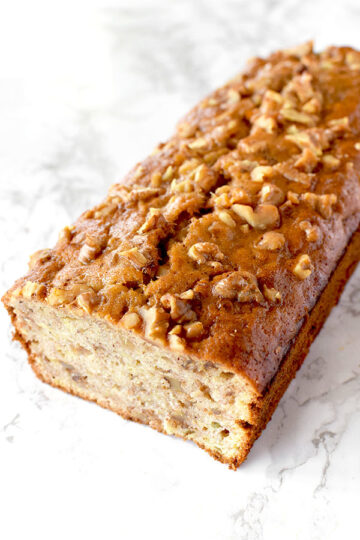
Other Banana Recipes you may also like:
Other breakfast recipes you may like:
Banana Bread with Oil
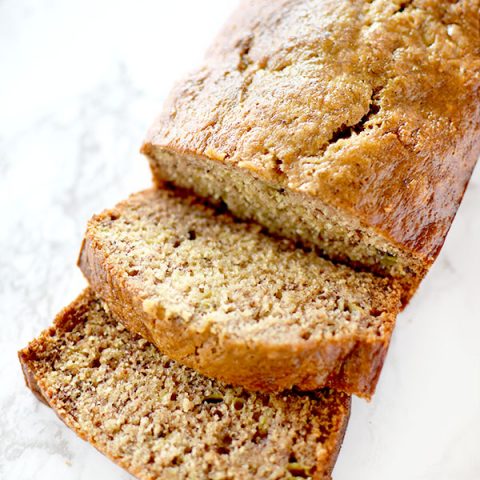
This dairy free banana bread is made with oil, making it extra moist. This recipe is a great way to use old spotted and soft bananas.
Ingredients
- 1 ½ cup all-purpose flour (190 grams)
- 1 teaspoon cinnamon
- 1 teaspoon baking soda
- ½ teaspoon salt
- ¾ cup white sugar (150 grams)
- ⅓ cup oil (80 milliliters)
- 4 medium or 3 large bananas, overripe
- 2 eggs
- 2 teaspoons vanilla
Instructions
- Preheat the oven to 350°F or 175°C.
- Whisk together flour, cinnamon, baking soda, and salt to a mixing bowl.
- Add sugar, oil, bananas, eggs, and vanilla to the bowl. Mix until everything is well incorporated.
- Pour into a parchment paper lined bread pan.
- Bake for 50 minutes to 1 hour, or until a cake tester inserted into the center comes out clean.
- Let the loaf cool in the pan for about 10 minutes before moving to a cooling rack.
Recommended Products
Some of the links below are affiliate links, which means that if you choose to make a purchase, I will earn a small commission. This commission comes at no additional cost to you.
Nutrition Information:
Yield:
12Serving Size:
1Amount Per Serving: Calories: 204Total Fat: 7gSaturated Fat: 1gTrans Fat: 0gUnsaturated Fat: 6gCholesterol: 31mgSodium: 206mgCarbohydrates: 33gFiber: 1gSugar: 17gProtein: 3g
What type of oil?
Any edible oil can be used but I generally recommend using a neutral flavored oil to avoid impacting the taste.
Wow! I love this banana bread and I don't even like bananas! I made two adjustments, one additional large banana (I needed to get rid of it) and a squeeze of lemon juice. It was so moist and wonderful. The best I've ever had.
I'm so glad to hear it! ❤️
a question : can I add chocolate chips to the banana bread recipe?
Absolutely!
This is my go-to banana bread recipe. I have even made it with similar quantities of blackberries or over-ripe apples. Works every time. I do make adjustments though. I find the sugar quantity listed is over the top, so I use ⅓ of a cup. It's perfectly sweet enough for me, my family and friends. Usually I also add ¼ cup of desiccated coconut. Often I will include ⅓ cup of raisins or sultanas. I have also played with including crushed almonds or walnuts. ⅓ cup of chocolate powder or cocoa also works well for a slight change.
came out great can't wait to try the rest of your recipes. I wish i was able to attach a picture
I'm glad to hear it 🙂 I hope you enjoy the other recipes as well!
Could we replace the all-purpose flour with glutinous rice flour? Thank you.
I've never tried it, but based on my research you may be able to using long grain glutinous rice flour which is used for baking in Asian cuisine. However, I cannot find the conversion rate to do this... it may be 1:1 but I honestly have no idea.
Thank you -- I just made this, and it's absolutely delicous! Very moist and flavourful. I also appreciate the measurements given in weight as well as volume, as I find it's much easier and more accurate to weigh ingredients (plus less washing up later).
I'm happy to hear you enjoyed it!
I usually measure in cups but if it means less to wash later I think I'll move over to weighing everything 😛
Best banana bread I have ever made! Absolutely fantastic!
I'm so glad to hear it!